The San Diego SEAL Tour: Route, Timing and What to Expect
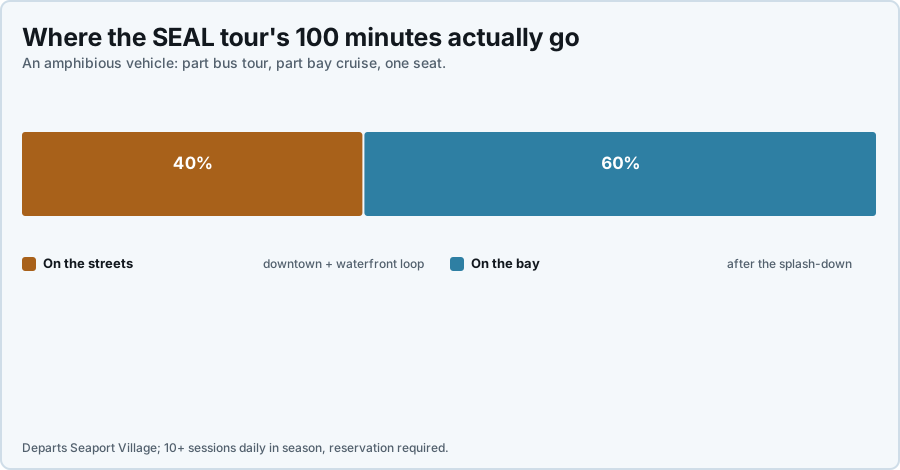
One vehicle, two halves. The SEAL Tour spends about 40 minutes on San Diego's streets and about 60 minutes on the bay, and almost everything people get wrong about it comes from not knowing that split.
By David Ramirez, San Diego Bay cruise specialist & harbor experience guide
Short answer
The San Diego SEAL Tour runs roughly 100 minutes total: about 40 minutes driving city streets, then a splashdown and about 60 minutes cruising San Diego Bay in the same amphibious vehicle. It boards at Seaport Village (825 W Harbor Drive) or the Embarcadero (1004 N Harbor Drive), reservations are required, and check-in closes 30 minutes before departure.
There is a boat ramp on the San Diego side of the bay where, several times a day, a bus drives into the water and keeps going. That is the whole pitch of the SEAL Tour, and it is also the part that confuses people: they book it expecting a harbor cruise with a gimmick, or a bus tour with a gimmick, and it is neither. Since 2015 I have spent my working life mapping how the bay's tours actually run, which pier each one leaves from, and what the route really covers. This one gets more questions than anything else on the water, so here is the full shape of it before you commit 100 minutes and a booking fee.
What actually happens on the San Diego SEAL Tour?
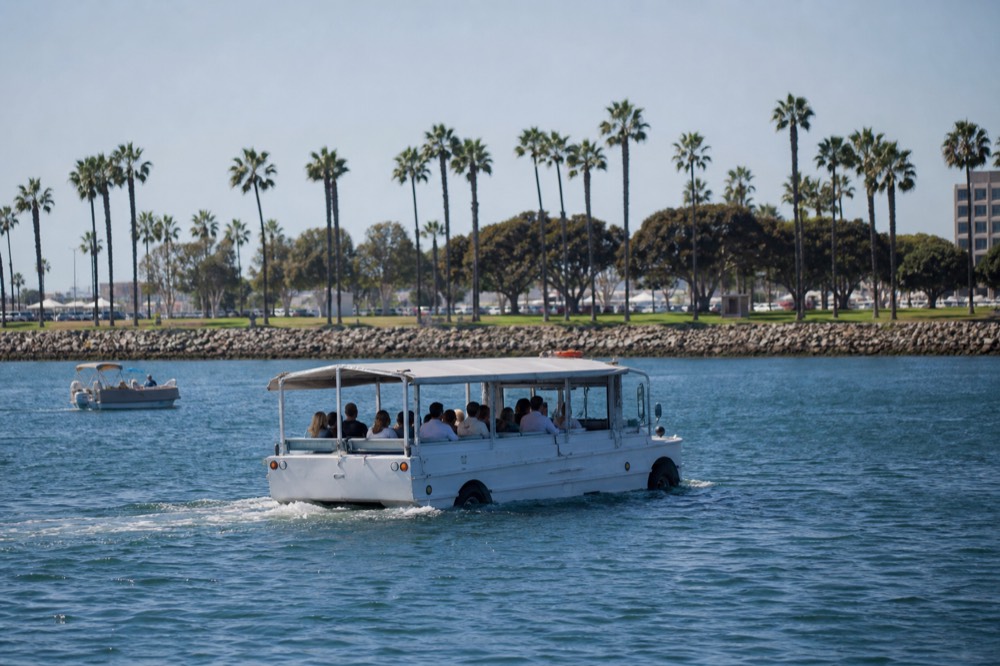
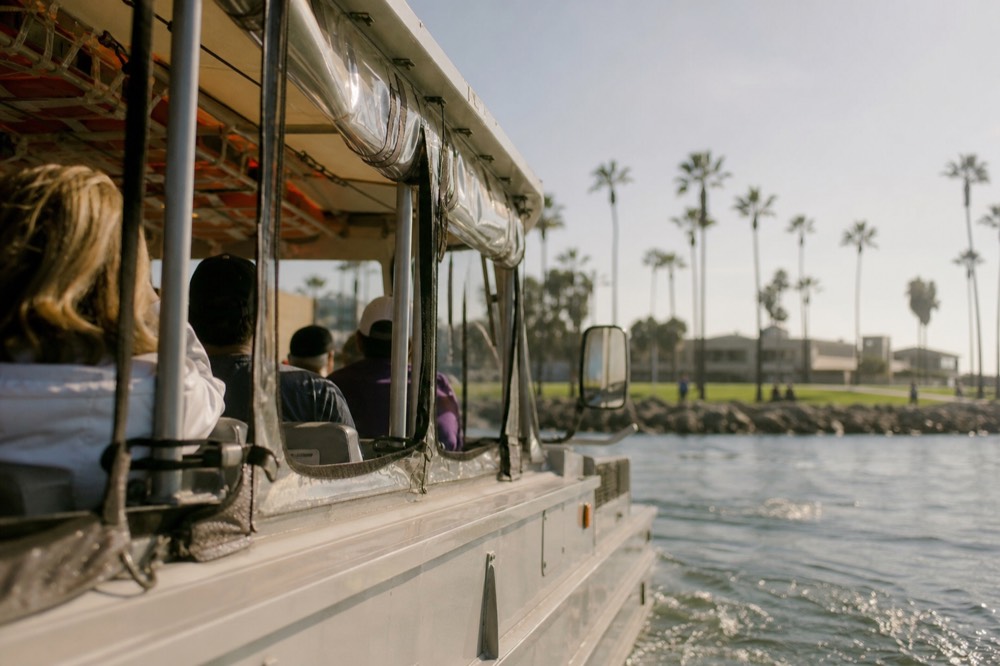
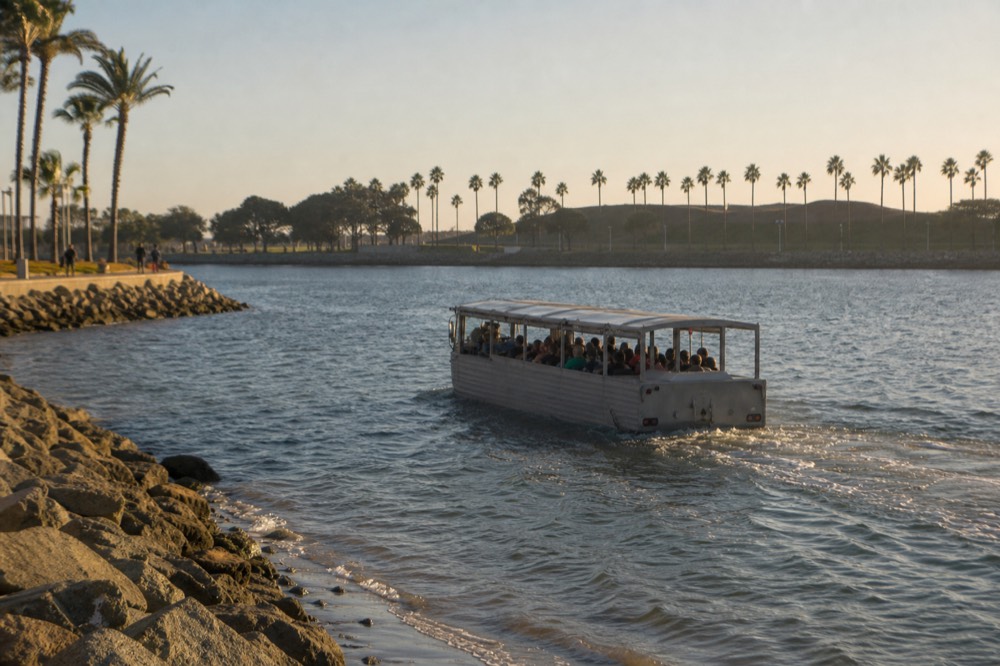
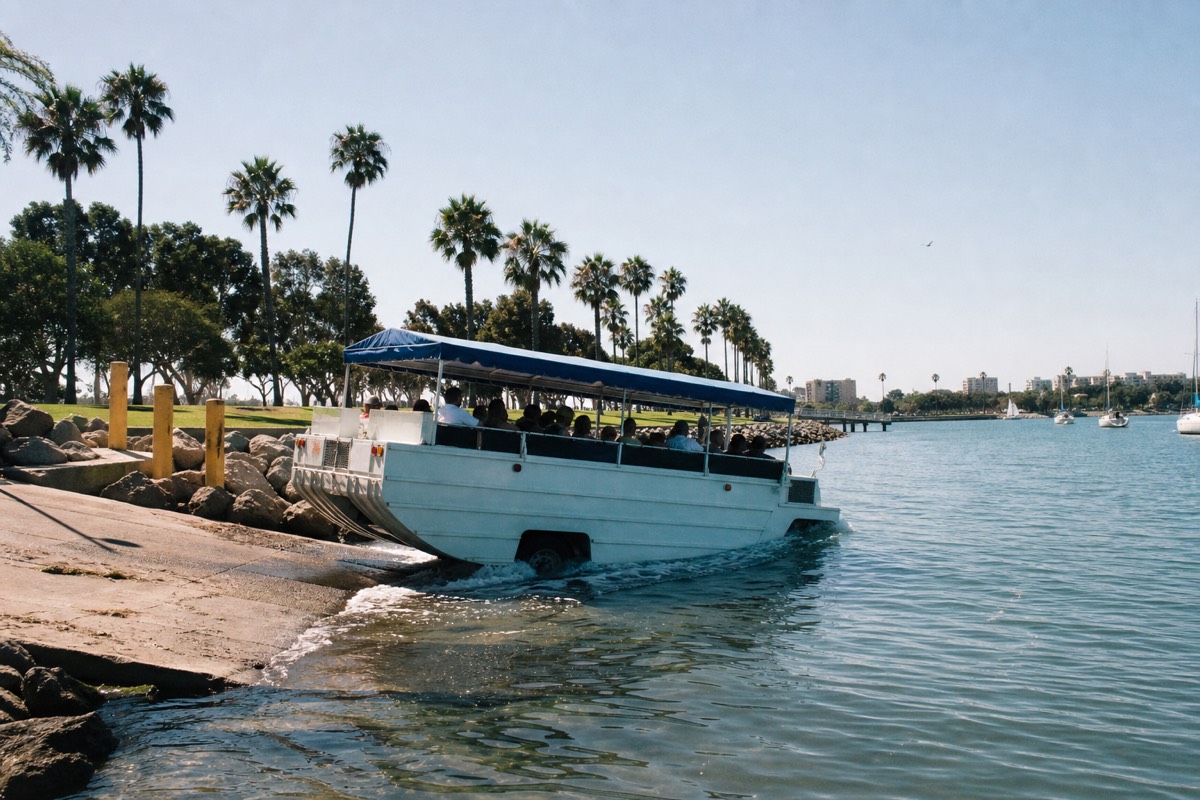
A Coast Guard certified amphibious vehicle called a Hydra-Terra picks you up on land, drives a narrated loop through San Diego's waterfront streets, descends a boat ramp at Shelter Island, and becomes a boat. The same guide narrates both halves. Total run time is about 100 minutes, and you end back where you started.
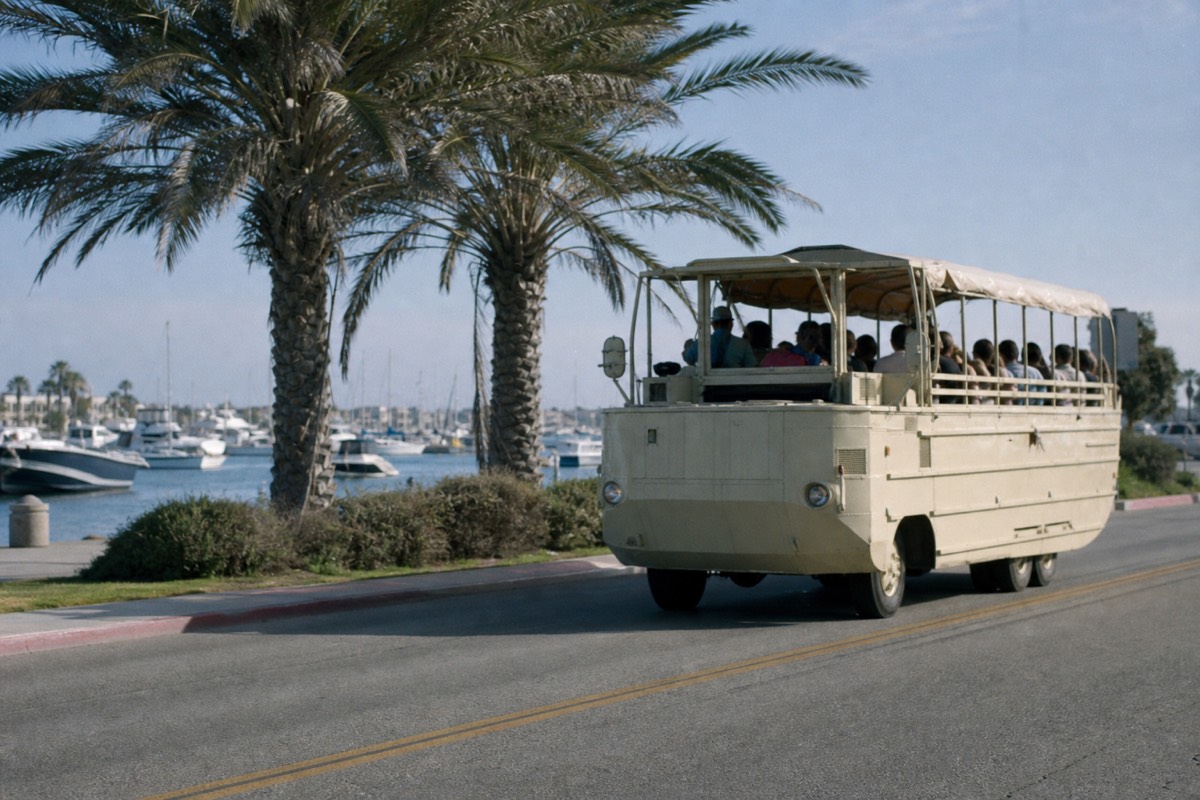
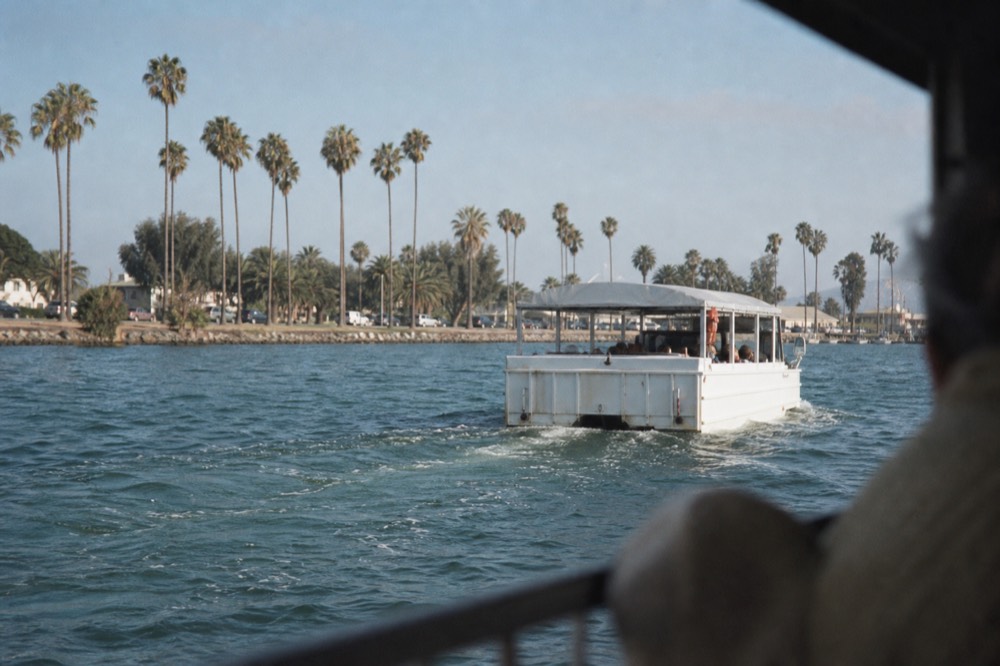
The vehicle is the point. It has a hull, a propeller and marine navigation gear, plus wheels and a road-legal drivetrain, so it is licensed and crewed as both a bus and a vessel. The fleet as it stands in August 2026 is a custom Hydra-Terra design, Coast Guard certified, roughly 39 feet long and built to carry more than 40 passengers, which is why it feels closer to a small ferry than a bus the moment it floats.
That dual certification is not decoration. San Diego Bay is working water shared with commercial traffic and a Navy fleet, and the vehicle is crewed to vessel rules for exactly that reason. When a SEAL vehicle and a commercial boat made minor contact near Shelter Island in late May 2026, no injuries were reported and the Coast Guard reviewed it the way it reviews any contact on this harbor.
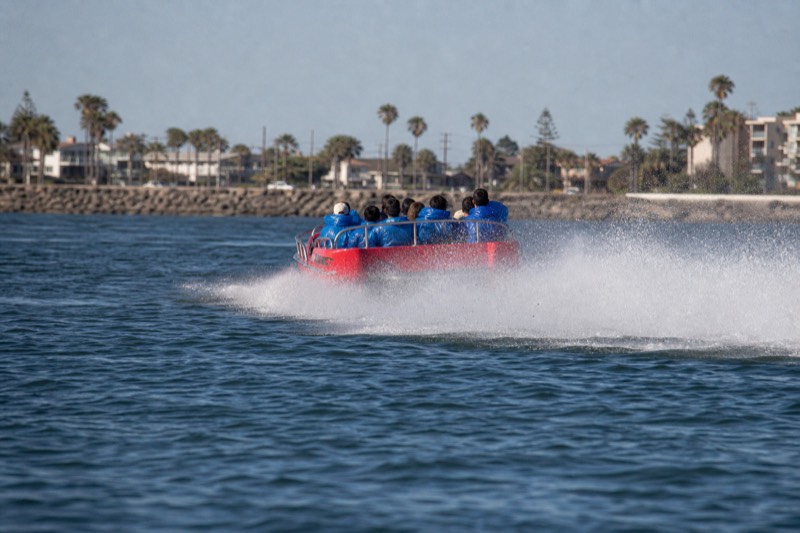
Seating is open-air with a canopy overhead, which matters more for sun and wind than for rain. The operator states that guests typically stay dry through the splashdown itself, with the occasional few drops off a passing wake, so this is not a soak-you ride. If you want to actually get wet on the bay, that is the jet boat option, not this.
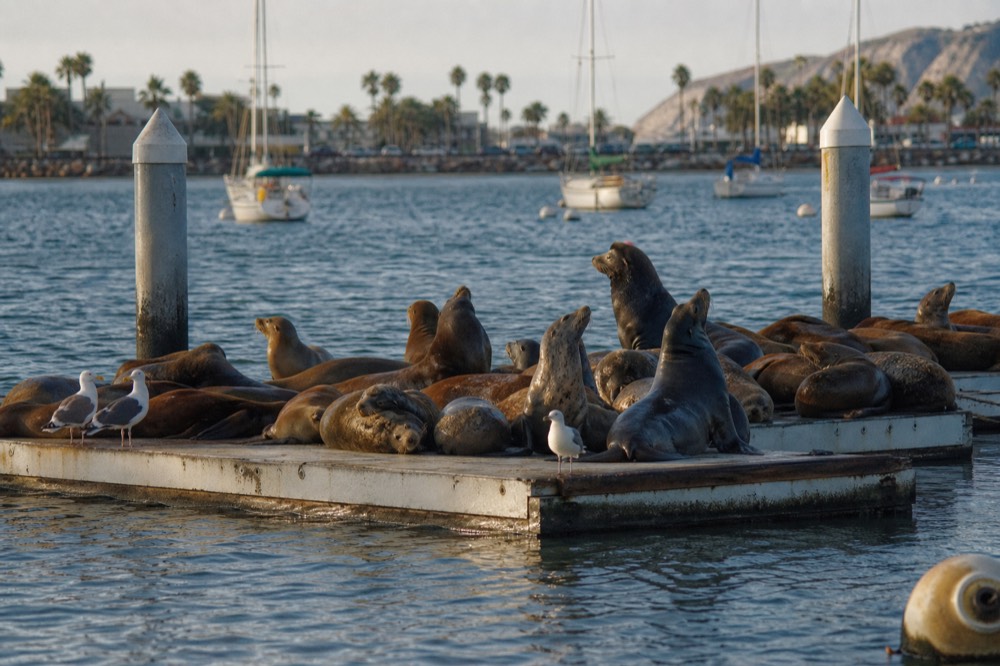
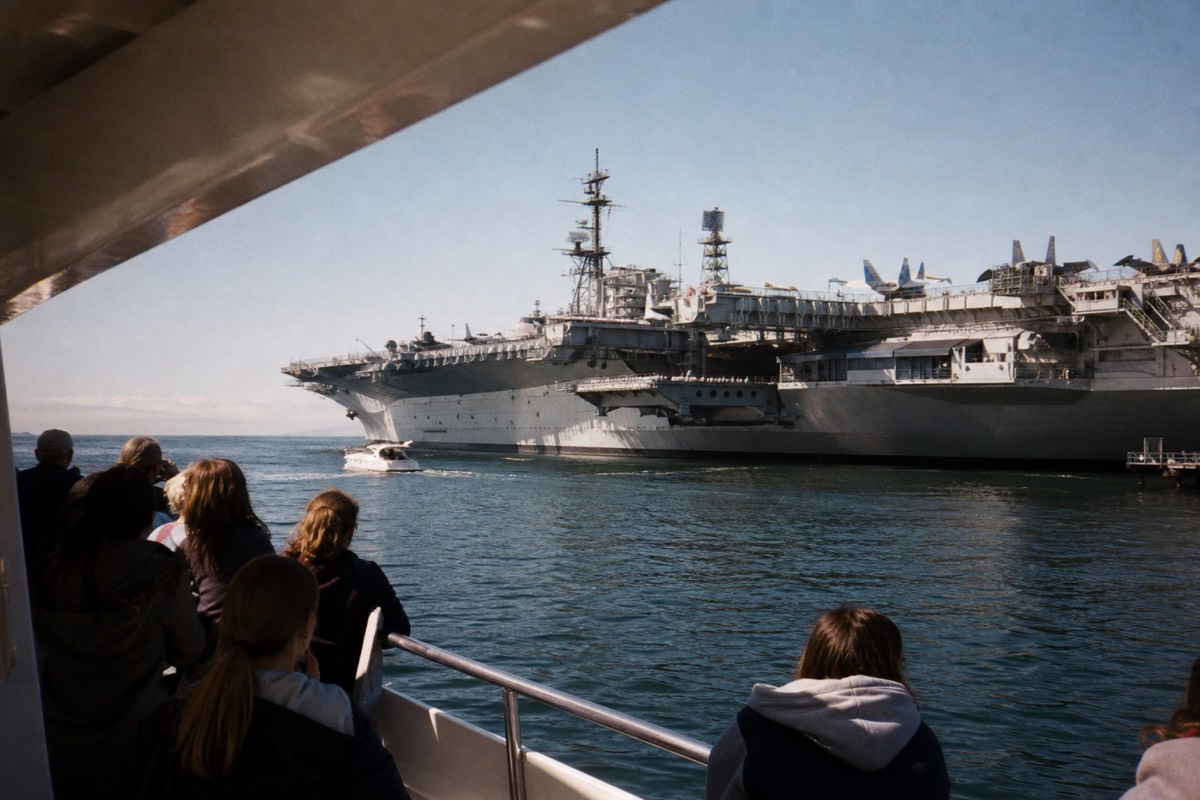
The land half is a genuine city tour rather than a transfer to the ramp. It runs the Harbor Drive corridor past the USS Midway, along the working edge of the bay and past San Diego International Airport, with the guide telling the Lindbergh story and the story of the 14-mile working harbor. Then the road tour becomes a harbor cruise at the Shelter Island ramp. On the water you get the Midway again from the waterline, the Star of India and the rest of the Maritime Museum fleet, active Navy vessels, North Island Naval Air Station, the Point Loma submarine base, the Navy's marine mammal facility, and the bait barges where California sea lions pile up year round.
Narration is live, not recorded, which is why the tour changes depending on what is tied up in the harbor that morning. On the listing it holds 4.7 stars across 1,348 reviews, the second-strongest score among the bay's big-volume sightseeing products.
How long is the SEAL Tour, and how much of it is on the water?
About 100 minutes door to door, split roughly 40 minutes on land and 60 minutes on the water, per the operator's own FAQ. The booking listing rounds this to 1 hour 45 minutes, which accounts for boarding. Nearly two-thirds of your paid time is spent afloat, which is more bay time than most people assume.
That ratio is the single most useful fact on this page. People compare the SEAL Tour to a one-hour harbor cruise and assume they are trading water time for novelty. They are not. Sixty minutes afloat is a full harbor loop by any normal measure, and the 40 minutes of street tour is added on top rather than carved out of it.
Here is how the time distributes in practice, using the operator's published split plus the check-in policy you will actually be held to.
Segment
Roughly how long
What is happening
Check-in window
30 min before departure (60 in peak season)
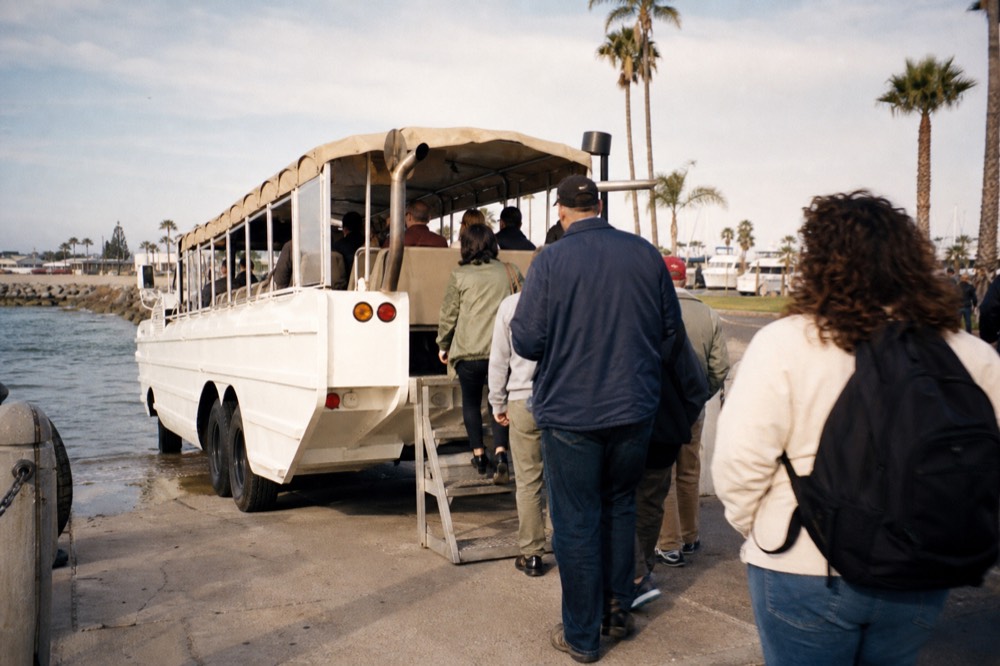
Ticket booth at Seaport Village or the Embarcadero; seating is first checked in, first seated
Street loop
~40 min
Harbor Drive, USS Midway from the road, the airport, Lindbergh and harbor history
Ramp and splashdown
~2 min
Shelter Island ramp; the photo everyone takes
Bay cruise
~60 min
Maritime Museum ships, Navy fleet, North Island, submarine base, sea lion barges
Return to depot
included in the 100
Back out of the water and up to the same boarding point
Two practical notes fall out of that table. First, budget 2.5 hours of your day, not 1.75, because the check-in rule is enforced and boarding order is decided by arrival. Second, there are no restrooms on board and the run is continuous, so use the facilities at the depot before you board. If your day is already tight, where the boats leave from covers how long each Embarcadero dock realistically takes to reach on foot.
Where does the SEAL Tour depart from, and which boarding point should you pick?
Two depots: Seaport Village at 825 West Harbor Drive, and the Embarcadero at 1004 North Harbor Drive. Both run the same route and the same 100 minutes. Seaport Village is the one to pick if you are driving or have accessibility needs; the Embarcadero point sits about a five-minute walk from the cruise ship terminal.
The choice is entirely about logistics, not about the tour. You board at one and return to the same one, so pick the depot that fits the rest of your day rather than the one that appears first in the booking flow.
Seaport Village depot
Embarcadero depot
Address
825 W Harbor Drive
1004 N Harbor Drive
Parking
Seaport Village lot at 849 W Harbor Drive; partial validation with a $10 minimum purchase in the village
Metered Port pay stations and nearby garages along North Embarcadero
Walk to cruise terminal
Longer, roughly the length of the Embarcadero
About five minutes
Accessibility boarding
The operator's accessible boarding point
Not the designated accessible stop
Best for
Drivers, families, anyone combining the tour with lunch and shops
Cruise passengers, hotel guests at the north end, anyone already at the Midway
Parking is the usual Embarcadero problem. The Port of San Diego publishes the current meter and pay-station rules for the waterfront, and the practical answer on a summer Saturday is to arrive an hour early or park once for the whole day and walk. See the Port's parking information before you commit to a mid-afternoon departure, and check the operator's own SEAL Tour FAQ page for the current check-in rule if you are travelling in peak season.
If you are arriving off a ship and want the maximum sightseeing per hour ashore, the Embarcadero depot plus the cruise terminal explained is the efficient version of this day.
Which seat should you take on an amphibious vehicle?
Seating is open bench rows under a canopy, and boarding runs first checked in, first seated. Rows toward the front give you the guide and the clearest forward view through the splashdown; rows at the back give you the widest sideways view on the water. Neither side is consistently better, because the vehicle turns around.
This is the question I get asked most and the one with the least honest answer floating around online. The vehicle does a loop on land and a loop on the water, so the "sit on the left for the Midway" advice you will read on forums is only half true: you pass most landmarks once from the road and again from the water, usually on opposite sides. What genuinely differs is your position front to back.
Where you sit
What you get
The trade-off
Front rows
Closest to the live guide, best forward view down the ramp at splashdown, easiest to ask questions
Least side-to-side swivel room for photos
Middle rows
The compromise seat, decent view both ways, most stable feel on the water
Nothing distinctive
Back rows
Widest unobstructed side views, best for shooting the wake and the skyline
Guide narration is furthest away, more engine and road noise on the street half
Aisle vs window
Window seats own the photos; aisle seats are easier with small children
Window seats catch more wind on the bay leg
What I tell visitors, as a judgment call rather than a rule: if you are here for the photographs, check in early and take a back window seat. If you are here with kids who will actually listen to the guide, get them in the first three rows. The one thing worth doing regardless is arriving early enough to have a choice, because boarding order really is decided at the ticket booth.
Open-air also means wind. San Diego's marine layer sits over the bay through late May and the first half of June, and even in August the water is cooler and breezier than the sidewalk you queued on. A light jacket beats a sweater you have to carry. There is more on that in what to wear on the water.
Is the SEAL Tour better than a plain harbor cruise?
They solve different problems. A harbor cruise gives you more open deck, a bigger vessel and a cheaper hour on the water. The SEAL Tour gives you a narrated city tour and an hour afloat in one booking, plus the amphibious novelty. If you only have one slot and you have never seen downtown, the SEAL Tour covers more ground.
Set against the rest of the bay's lineup, the amphibious loop occupies a specific niche: it is the only product that shows you the city and the water in the same ticket. That is worth real money to a visitor with two days in San Diego, and worth nothing at all to someone who has already walked the Embarcadero.
The honest split is this. If your priority is the skyline, the Coronado Bridge and the Navy fleet photographed properly from an open deck, book from the harbor cruise lineup instead and spend the difference on a longer sailing. If your priority is showing a first-time visitor as much of San Diego as one booking can hold, the amphibious loop wins on coverage. And if you are travelling with a teenager who will not sit still for 100 minutes, the jet boat option does the whole thing in half an hour at speed.
Do not settle it on feel alone. Put the two side by side on the exact day you are free: the harbor cruise lineup holds every bay departure in one place, and each listing shows the live price and what is still open for your date, which is where a $55.59 amphibious ticket and a $37 harbor cruise stop being abstract.
Does the SEAL Tour work with young kids or mobility needs?
Yes on both counts, with planning. The vehicle is open-air, family-oriented and continuously narrated, which suits kids better than a long seated cruise. Part of the fleet carries a manual wheelchair lift, but those vehicles must be requested in advance and accessible boarding happens only at the Seaport Village stop.
Families are the core audience here and the format helps: something changes every few minutes, the splashdown is a genuine event, and 100 minutes is short enough to survive without a meltdown. The two real constraints are the lack of onboard restrooms and the fixed seating, so a bathroom stop at the depot and a snack in a bag solve most of it.
Sea lions on the bait barges are the reliable wildlife payoff, and the operator notes they are year-round residents rather than a seasonal bet, with pupping generally falling between mid-May and July. The barking is not a lucky break either: the West Coast California sea lion population now runs above 250,000 animals and has roughly tripled since the 1970s, which is why the barges are stacked rather than occasionally occupied. Kids get the animals during the water half of the 100-minute run, and that is usually the part they describe at dinner.
Need
What the operator provides
What you must do
Common wheelchair
Manual lift on part of the fleet, per the accessibility policy
Request in advance, 24 hours' notice preferred
Collapsible wheelchair
Permitted on board, crew assist with loading
Mention it at booking, arrive early
Accessible boarding point
Seaport Village stop only
Book the Seaport Village departure, not the Embarcadero
Hearing impaired guests
Illustrated tour script guide on request
Request ahead so it is on the vehicle
Service animals
Trained service dogs permitted under ADA rules
24 hours' notice requested; comfort animals are not covered
Loading time
Crew assistance with the lift
Arrive at least 30 minutes before departure
The operator's accessibility policy page carries the current wording and the phone line for arranging accommodations, and it is the one thing on this page I would confirm directly rather than take from any third party, because fleet availability changes.
If that is your group, do not leave it to the ticket booth on the day: the harbor cruise lineup is where departures fill first at mid-morning on weekends.
How often does the SEAL Tour run, and do you need to book ahead?
It runs year round except Thanksgiving and Christmas Day, with 10 or more sessions daily in season across the two depots. Reservations are required. Tickets can be bought at the booths, but they are sold on a reservation basis and regularly sell out in advance, particularly on summer weekends.
Frequency is the quiet advantage of this tour. Where a whale watch runs once or twice a day and a dinner cruise runs once an evening, the amphibious loop cycles through the day, which means a missed departure is usually recoverable and you can slot it around a lunch reservation rather than build the day around it. Winter is thinner: the operator notes reduced frequency in colder months and advises booking further ahead precisely because fewer sessions run.
Weather cancels it occasionally. Heavy rain, high winds or anything that makes an open-air vessel unpleasant can delay or cancel a departure, with rescheduling or a refund offered when that happens. The listing itself carries free cancellation up to 24 hours before departure, so holding a slot on a forecast you do not trust costs nothing but attention.
One 2026 date to avoid if you hate crowds: Harbor Drive closes between First Avenue and Park Boulevard for Comic-Con from July 22 to 26, with pedestrian access maintained but traffic pushed around the closure. The tours still run. Getting to them by car that week is the problem.
If you want the amphibious loop specifically, pick your date from the harbor cruise lineup while your dates are still open.
What does the SEAL Tour cost, and is the pricing straightforward?
Tickets currently start from about $55.59, and the figure moves with the date and demand rather than sitting still. Adult tickets bought on the operator's own site include free self-guided walking tours and admission to selected museums, which is the part most price comparisons miss.
Straight ticket price is not where the value question is decided. What matters is what an hour on the water costs you, and the amphibious loop sits in the middle of the bay's range once you divide the fare by the minutes afloat.
Booking
From price
Published run time
Minutes afloat
Cost per minute on the water
SEAL Tour
$55.59
~100 min
~60
about $0.93
Harbor cruise, one hour
$37
60 min
60
about $0.62
Patriot jet boat
$45
30 min
30
about $1.50
Three-hour whale watch
$34
~180 min
~180
about $0.19
Read that table honestly and the amphibious loop is not the cheap way to be on San Diego Bay. It costs half again as much per water minute as a plain harbor cruise, and the extra buys you the 40-minute street tour, the live narration on both halves and the ramp. The bundled walking tours and museum admission shift the arithmetic further if you actually use them, and most visitors do not, so judge the price on the 100 minutes alone and treat the extras as a bonus.
Prices move with season and demand, so treat any figure here as recent rather than fixed and read the number on the booking page before you commit. Free cancellation up to 24 hours out applies on the listing, which is the practical hedge against booking early at a good rate.
Where it gets genuinely expensive is a family of four in peak season. At that point compare against a two-hour harbor cruise for the same group, and ask whether the land half is worth the difference. If nobody in the group has seen downtown San Diego, it usually is. If you are staying in the Gaslamp and have already walked it twice, it usually is not. That trade-off is the whole subject of is the San Diego SEAL Tour worth it?, which runs the numbers on the value question rather than the logistics.
Forty minutes on wheels, a ramp, then an hour afloat: the split that decides whether this tour suits your day.Do you get wet on the San Diego SEAL Tour?
Not normally. The operator states that guests typically stay dry through the splashdown, with the occasional few drops from a passing wake. The vehicle enters the water down a ramp rather than dropping in, so the splash is more visual than soaking. The open-air seating means wind and spray matter more than water over the bow, which is why a light jacket is the sensible layer.
Where does the SEAL Tour splash into the bay?
At the Shelter Island boat ramp. That is the transition point where the road tour becomes a harbor cruise, and it is the photograph everyone on board tries to take. From there the vessel runs the northern end of San Diego Bay past the Maritime Museum ships, the Navy fleet, North Island Naval Air Station and the sea lion bait barges before returning to the depot you boarded at.
Are there restrooms on board the SEAL Tour?
No. The Hydra-Terra vehicles carry no restrooms and the 100-minute run is continuous, so the operator recommends using the public facilities at Seaport Village or the Embarcadero before boarding. Plan for that with young children, and factor it into the 30-minute check-in window rather than arriving with two minutes to spare.
Is the SEAL Tour worth it if you have already done a harbor cruise?
Less so. About 60 of the 100 minutes cover water you have already seen, and the genuine addition is the 40-minute street tour plus the amphibious novelty. If you have already cruised the bay and walked downtown, the marginal value is thin. If you have done neither, the SEAL Tour compresses both into one booking, which is exactly what it is designed for.
Does the SEAL Tour run in winter?
Yes, year round except Thanksgiving and Christmas Day, though departures thin out in the colder months and severe weather can cancel a run. The operator advises booking further ahead in winter for that reason. Free cancellation up to 24 hours before departure applies on the listing, so an early booking against an uncertain forecast is low risk.
Ready to pick your session?
The general pick is the amphibious loop itself: about 100 minutes, streets then water, 4.7 from more than 1,300 reviews, from about $55.59, free cancellation up to 24 hours out.
San Diego SEAL Tour (amphibious)
★ 4.7 · 1,348 verified reviews
Have a travel date in mind? Check departure times and the current price for your session before arranging the rest of the day; check-in closes half an hour early.
1 hour 45 minutes · Departs 825 W Harbor Dr, San Diego, CA 92101, USA · Free cancellation up to 24 hours
2 hours · Departs 990 N Harbor Dr, San Diego, CA 92101, USA
The classic narrated loop of San Diego Bay: the USS Midway, the Star of India, the Coronado Bridge and the working Navy fleet, from the deck of a City Cruises boat off Broadway Pier.