San Diego Cruise Terminal Guide 2026: Where Ships Dock and What to Do Before You Board
Two piers, one two-mile waterfront, and a spare day that most passengers waste. Here is where the ships tie up, how to reach them, and how to spend the hours before your boarding time without cutting anything close.
By David Ramirez, San Diego Bay cruise specialist & harbor experience guide
Short answer
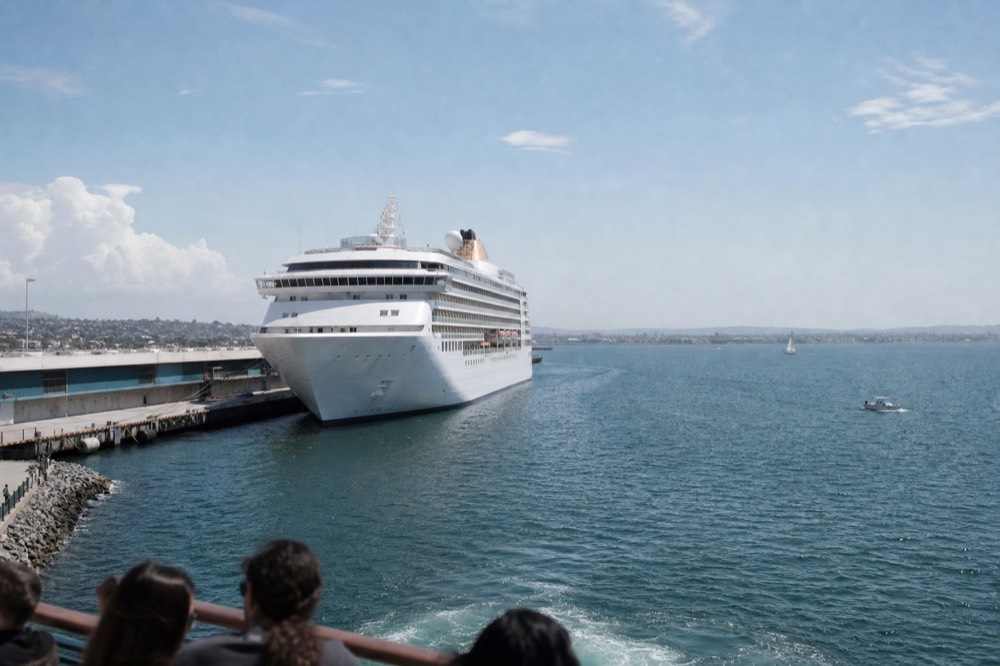
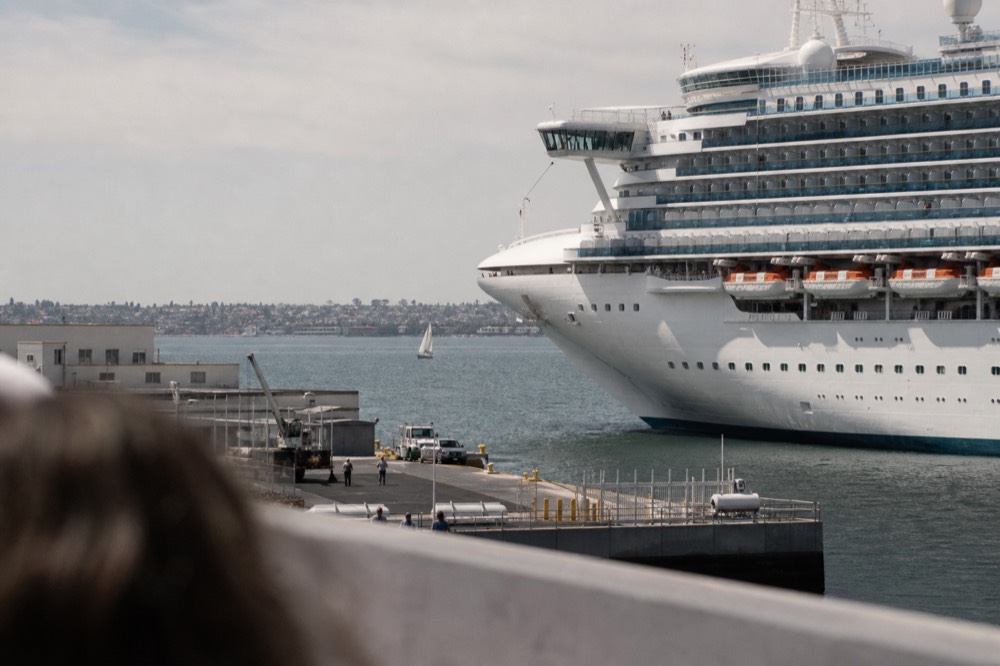
Cruise ships in San Diego dock at two Port of San Diego terminals on the downtown Embarcadero: the B Street Pier and Cruise Ship Terminal at 1140 N. Harbor Drive, which handles most calls, and the Port Pavilion on Broadway Pier at 1000 N. Harbor Drive. Both sit within a short walk of Seaport Village, the USS Midway and the small-boat docks that run bay cruises.
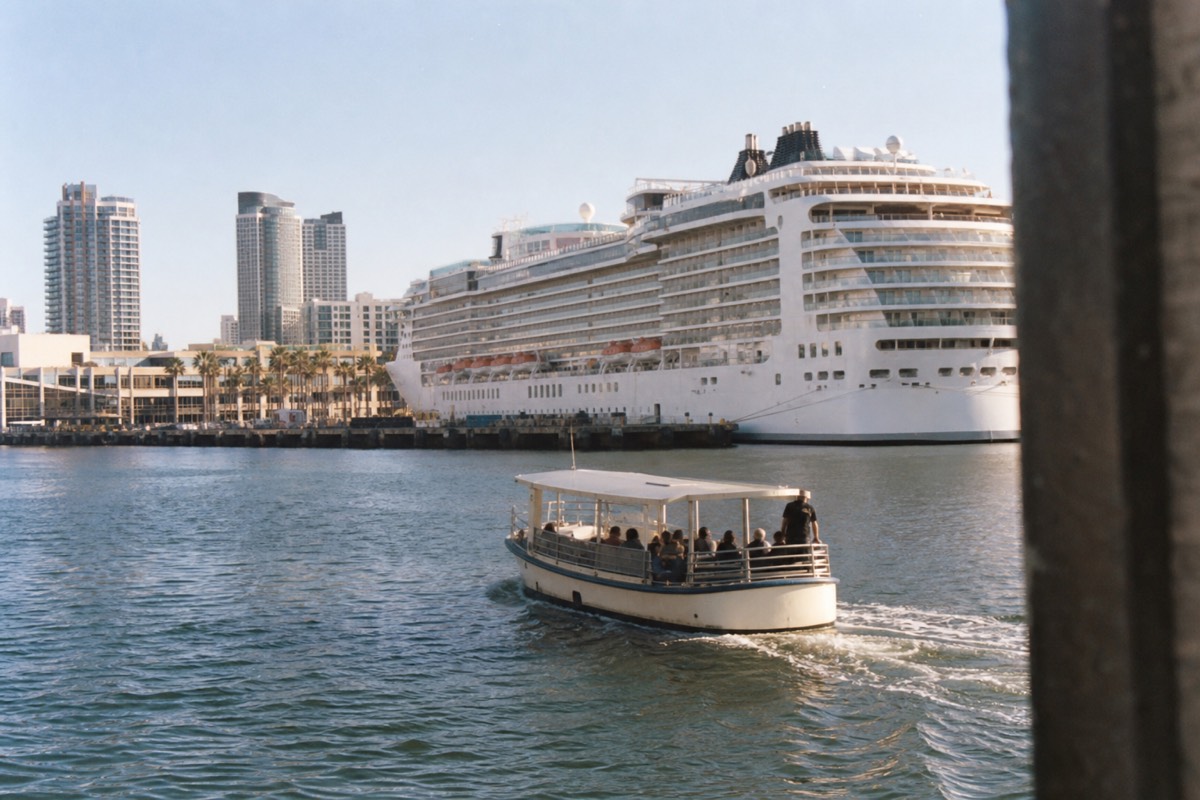
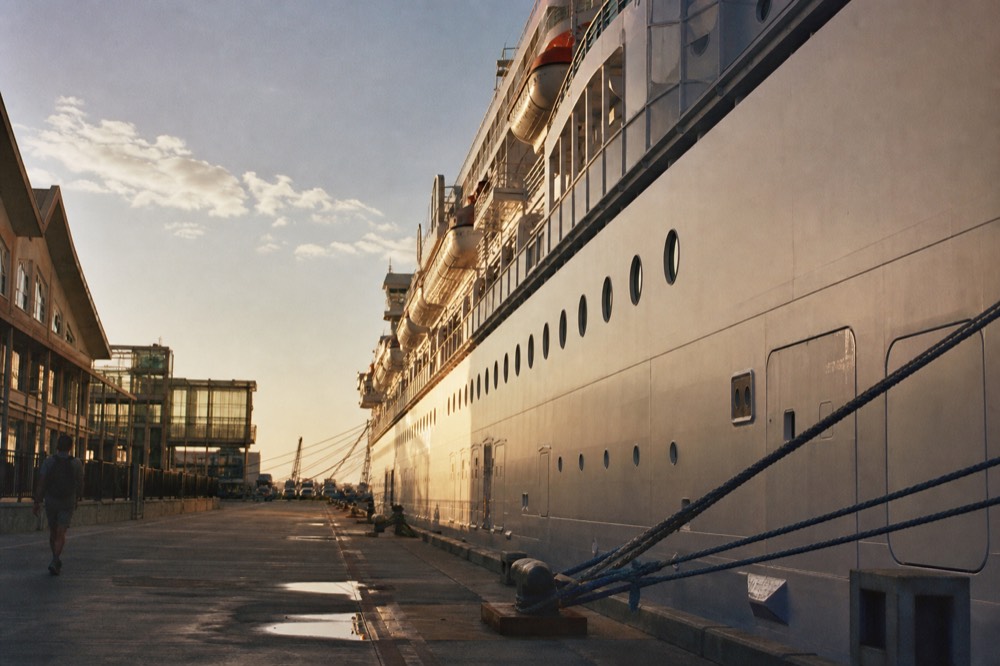
Harbor Drive tells you when a ship is in. The light changes on the west side of the street, a white wall appears where the water used to be, and by nine in the morning the sidewalk near the B Street Pier fills with people rolling suitcases toward a gate they have never seen before. I have spent a decade sending visitors onto boats from this stretch of waterfront, and the question I field most often has nothing to do with the bay cruises I know best. It is this: I board at three, my flight landed at eight, what do I do with the seven hours in between?
That gap is the reason this page exists. The ships that leave San Diego are ocean liners bound for Ensenada, Cabo, Hawaii and the Panama Canal. The boats I work with are small, they stay inside the bay, and they never leave United States waters. The two things sit about four hundred yards apart, and the second one solves the problem the first one creates.
Where exactly do cruise ships dock in San Diego?
San Diego has two cruise terminals, both on the downtown Embarcadero. Most ships tie up at the B Street Pier and Cruise Ship Terminal at 1140 N. Harbor Drive. The second berth is the Port Pavilion on Broadway Pier at 1000 N. Harbor Drive, which also works as an events venue with a public plaza.
The Port of San Diego runs both, and they sit on the same two-mile ribbon of downtown waterfront that holds the museums, the restaurants and the sightseeing docks. That is the single most useful fact on this page. Unlike the container terminals down the bay at Tenth Avenue and National City, the cruise piers are not out in an industrial zone behind a fence line. They are in the middle of the city, which is why a pre-cruise day here is worth planning rather than sleeping through.
B Street is the workhorse. It is the larger pier, with the main terminal building and the passenger flow to match. Broadway Pier is smaller and does double duty: it takes cruise calls, and between them it operates as the Port Pavilion, with a restaurant, a visitor center and public access to the waterfront. If your booking documents name Broadway Pier rather than B Street, nothing about your day changes except a two-block shift north or south. The short version of all this lives at Where do cruise ships dock in San Diego? if that is the only answer you came for.
B Street Pier & Cruise Ship Terminal
Port Pavilion on Broadway Pier
Address
1140 N. Harbor Drive, San Diego, CA 92101
1000 N. Harbor Drive, San Diego, CA 92101
Pier footprint
1,000 ft by 400 ft
1,000 ft by 130 ft
Main building
30,000 sq ft terminal building
52,000 sq ft cruise facility
Baggage handling
15,000 sq ft across two structures
15,000 sq ft
Rated capacity
3,419
2,600
Depth alongside
10.7 m
10.7 m
Other uses
U.S. Customs, special events
Visiting ships, special events, public plaza
One quirk worth knowing if you are the kind of traveller who reads the plaque: the shore power system is rated at 12 megawatts, and only one cruise vessel can plug into it at a time across both terminals. On a two-ship day, one of them is running on its own generators.
How do you get from the airport to the San Diego cruise terminal?
San Diego International sits roughly two miles north of the cruise piers, under ten minutes by road. Taxi and rideshare are the default. MTS route 992 covers the same corridor with a ride of about fourteen minutes, running every fifteen minutes and wheelchair capable. Santa Fe Depot, the downtown rail station, is two blocks east of the terminals.
That proximity changes the shape of the day. You do not need to build a two-hour transfer buffer. You need to build a plan for the time that buffer would have eaten.
The Port asks that anyone dropping you off goes beyond the gate and onto the pier itself rather than stopping on Harbor Drive. That sounds like a small detail until you are the one standing on a busy four-lane arterial with three suitcases. Passengers cannot park on the pier during a cruise, so the drop-off lane is exactly that: a lane for dropping off.
Rail is the underrated option. Santa Fe Depot is a landmark in its own right, and two blocks is a genuine walk rather than a euphemism for a mile. If you are coming down from Los Angeles or Orange County, the train puts you closer to your ship than most hotels do.
Arriving by
Distance to the terminals
What to know
Air, San Diego International (SAN)
About 2 miles north, under 10 minutes by road
Taxi, rideshare, or MTS route 992, roughly 14 minutes, every 15 minutes, wheelchair capable
Rail, Santa Fe Depot
Two blocks east
Walkable with luggage on level ground
Private car
Harbor Drive, four-lane arterial
No passenger parking on the pier; book an off-site lot before you arrive
Drop-off
Terminal pier
The Port asks rides to drop beyond the gate, on the pier
Cruise line transfer
Varies
Check whether your line runs an airport transfer before you book a taxi
Accessibility is handled at the terminal with wheelchair-accessible elevators and a passenger gangway, and cruise line representatives are on site. The Port's guidance is to arrange mobility assistance with the cruise line before you leave home rather than on the day, which is the sort of advice that reads as boilerplate until you need it.
What time should you actually arrive on embarkation day?
Arrive at the boarding time printed on your documents, and not before 10 a.m. The Port is explicit about both. Bring photo ID, your ship boarding document, and a passport or birth certificate. Passports are required for cruises to Mexico, which covers most short itineraries out of San Diego.
The early-arrival instinct is the single biggest cause of wasted time here. Terminals operate under current U.S. Coast Guard security standards, check-in opens on a schedule, and turning up at 8 a.m. for a 1 p.m. boarding slot buys you a chair and a view of a car park. Staggered boarding times exist to keep 3,000 people from arriving at once, and they work.
A few things are worth doing before you leave your hotel room rather than in a queue. Print your luggage tags and staple them on. Read your cruise line's prohibited items list, because it is the line's list and not the Port's, and it varies. Have the passport out and reachable, not buried in the case you are about to hand to a porter.
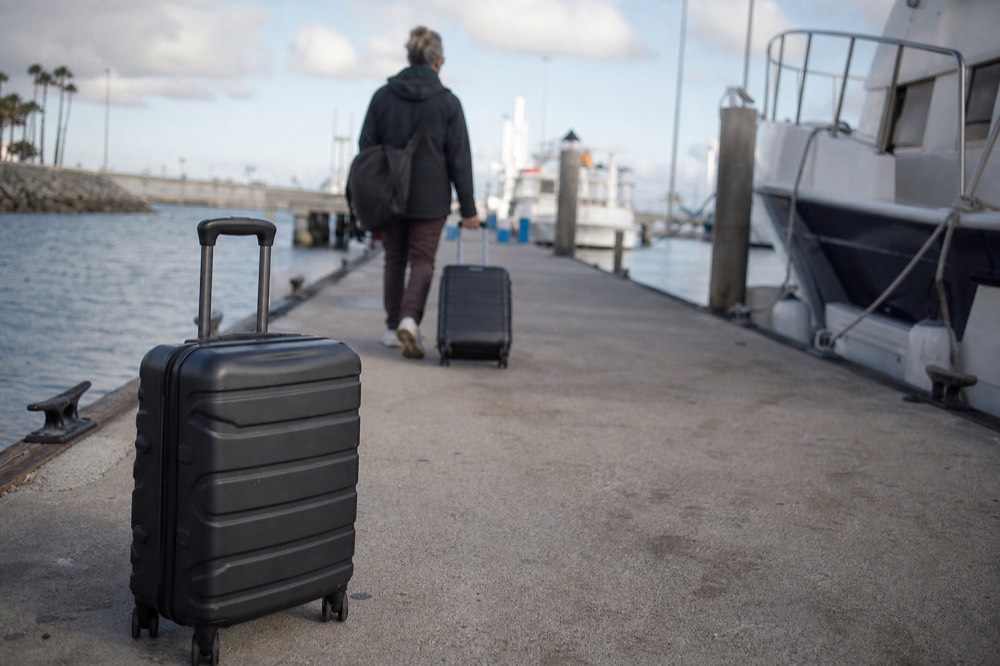
The luggage question deserves its own answer, because it is the one that decides whether a pre-cruise day is possible at all. Most passengers check out of a hotel in the morning and are then carrying everything they own until the ship takes it. The workable move is to leave bags with your hotel's bell desk after checkout, spend the day unencumbered, then collect them on the way to the pier. Hotels within the two-mile downtown ring almost all hold luggage as a matter of course. Ask at check-in the night before, not at 11 a.m. on sailing day when the desk has a queue.
Where do you park for a cruise out of San Diego?
The Port of San Diego does not own or operate cruise parking, and there is no long-term parking at the piers. Reserved off-site lots and garages run from about half a mile to just under three miles out, some with shuttles and some without. Book before you travel rather than driving in and hoping.
This is the part people get wrong. There is a natural assumption that a cruise terminal comes with a cruise car park attached, and here it does not. What exists instead is a ring of independent operators, each with its own rules about vehicle size, shuttle service and in-out privileges. The differences matter: a lot at 0.6 miles with no shuttle is a longer day than a lot at 1.4 miles with a free one.
Two structural details are easy to miss. First, several of the Ace Parking hotel garages, at the Wyndham and at BRIC North and BRIC South, sit directly across the street from the terminals, which is as close as anyone gets. Second, shuttles do not run from every location, so a booking confirmation is not by itself a promise of a ride. If you are in an RV, a dually, or anything tall, read the clearance notes carefully before you reserve. The Port publishes the current list on its long-term cruise parking page, and it is the only list I would trust for rates and phone numbers.
Option
Distance from terminals
Shuttle
Vehicle limits
Ace Parking hotel garages (Wyndham, BRIC North, BRIC South)
6 ft 9 in clearance, no high-profile or extra-large vehicles
ABM surface lots 1043 and 1090
0.6 miles
None
Nothing over 18 ft, no in-out privileges
ABM Campus at Horton garage, 800 4th Ave
Under 1 mile
None
Nothing over 25 ft, covered, no in-out
ABM lot 1124, Harbor Island
2.5 miles
None
Oversized accepted, pay per stall
San Diego's Park, Shuttle & Fly, 3405 Pacific Highway
2.8 miles
24/7 to airport and cruise terminals
No RVs or oversized vehicles
San Diego International Airport parking plaza
2 miles
No direct shuttle; taxi, rideshare or MTS 992
Covered, EV charging
If your day involves a car, the parking decision comes before the sightseeing decision, because it sets where you start and finish. Drop the car early, take the shuttle in, and the rest of the day happens on foot. That is also the version where a bay boat fits, which brings us to the point of the exercise.
A pre-cruise day with real margins: bags down early, water in the middle, at the pier before your slot.
What can you do with the hours before you board?
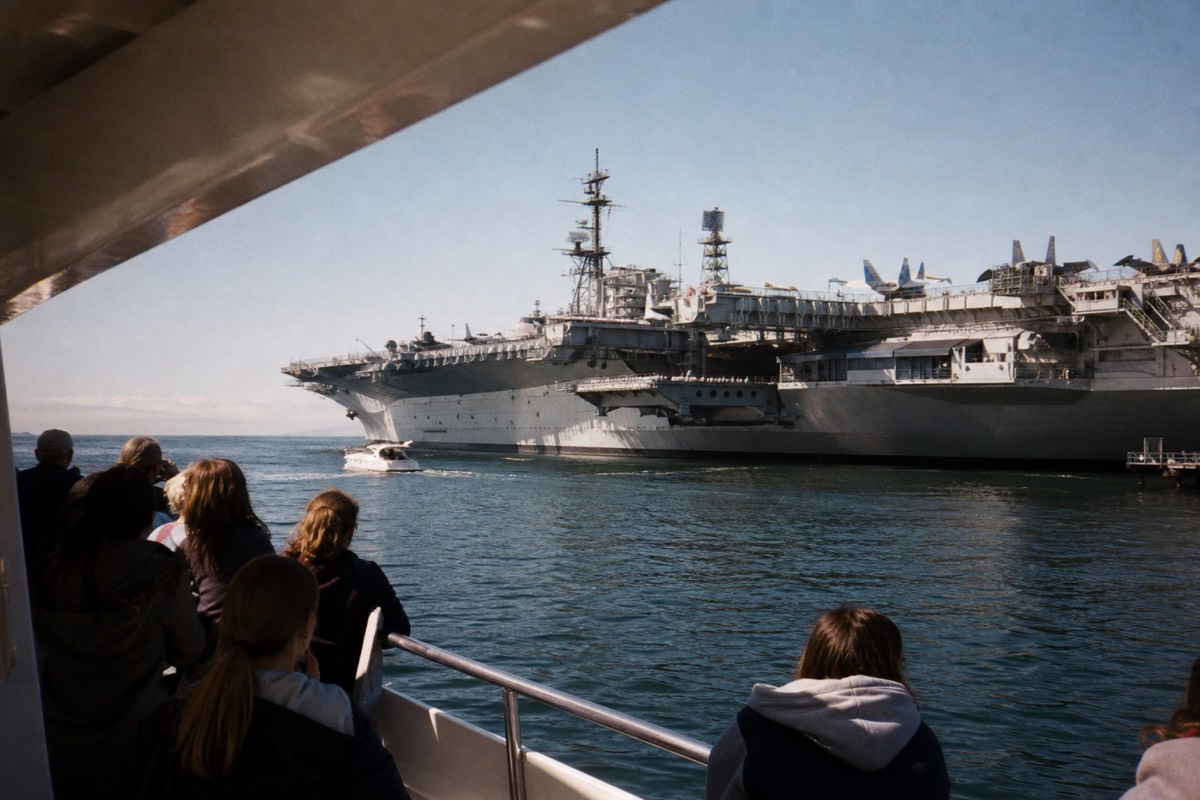
Everything worth doing on embarkation day is inside a two-mile radius of the pier. The Port counts 20 hotels, 6 museums, 8 parks, 9 performing arts venues and 5 attractions in that ring. The USS Midway, Seaport Village and the historic ships of the Maritime Museum are all on the same waterfront path as your terminal.
Walk south from the B Street Pier and the sequence is museum ships, aircraft carrier, waterfront park, Seaport Village. Walk north and you reach the county administration building and the grassy waterfront that runs toward the airport side. None of it requires a car, and none of it requires a reservation, which is the correct property for a day with a hard deadline at the end of it.
The Maritime Museum is the one I point people toward if they only have ninety minutes and want something with substance. The Star of India, the oldest active sailing ship of her kind, is tied up on the Embarcadero within sight of the cruise piers, and the museum publishes its current hours and ticketing on the Maritime Museum visitor page. It is a short walk, it is indoors when the marine layer is sitting low, and it finishes when you want it to finish.
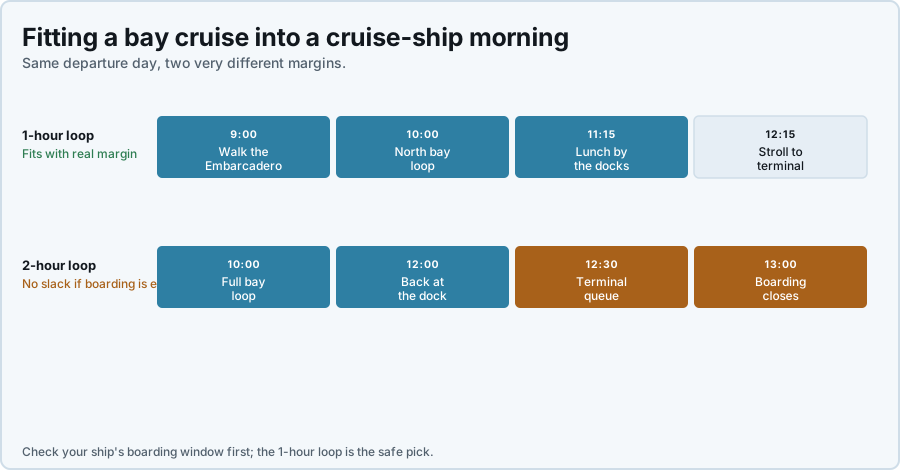
Here is the shape of a day that works, built with margins rather than optimism. Adjust the clock to your own boarding time and keep the buffers.
Time
What you are doing
Margin built in
8:00 to 9:00 a.m.
Land, or check out and leave bags at the hotel bell desk
Do this before the desk gets busy
9:00 to 10:30 a.m.
Walk the Embarcadero north to south: museum ships, carrier, waterfront park
No tickets needed, cut it short at any point
10:30 a.m. to 12:30 p.m.
A one or two hour bay cruise from the Broadway Pier area
Book the earlier of two departures, not the later
12:30 to 1:30 p.m.
Lunch at Seaport Village or on the Embarcadero
60 minutes is enough, 90 is comfortable
1:30 to 2:00 p.m.
Collect bags, ride to the terminal
Under 10 minutes by road, budget 30
2:00 p.m. onward
Terminal, security, check-in
Arrive at your assigned slot, not before
That plan has roughly ninety minutes of slack in it. Take the slack out and it still works. Add a whale watching trip, which runs three hours or more and leaves from Point Loma or Mission Bay rather than downtown, and it does not. That is the honest line between what fits and what does not, and it is worth reading where the boats leave from before you commit to anything with a distant dock.
Can you fit a bay cruise in before you board?
Yes, and it is the best-matched activity on the waterfront for an embarkation day. The classic narrated harbor loop runs one or two hours and leaves from 990 N. Harbor Drive, the same stretch of road as the cruise piers. Free cancellation up to 24 hours ahead covers you if your flight slips.
The logic is simple. Your ship is going to show you open ocean for a week. It is not going to show you the inside of San Diego Bay, because it leaves through the channel and turns south. The Coronado Bridge from underneath, the Navy fleet at rest, the sea lions piled on the bait barges: those are bay-side sights, and the only way to see them is on a boat small enough to stay in.
The standard harbor cruise carries a 4.5 rating across more than 3,200 reviews and offers both one-hour and two-hour versions. The one-hour is the safe choice on a tight morning. The two-hour covers both the north and south halves of the bay and is the better trip if your boarding slot is late afternoon, and the harbor cruise route, landmark by landmark sets out what each half actually passes. Pricing starts from $37 and moves with the date, though the live page is the only place to see today's number. If the timing works, look at the harbor cruise lineup and check the live price and availability on the official listing.
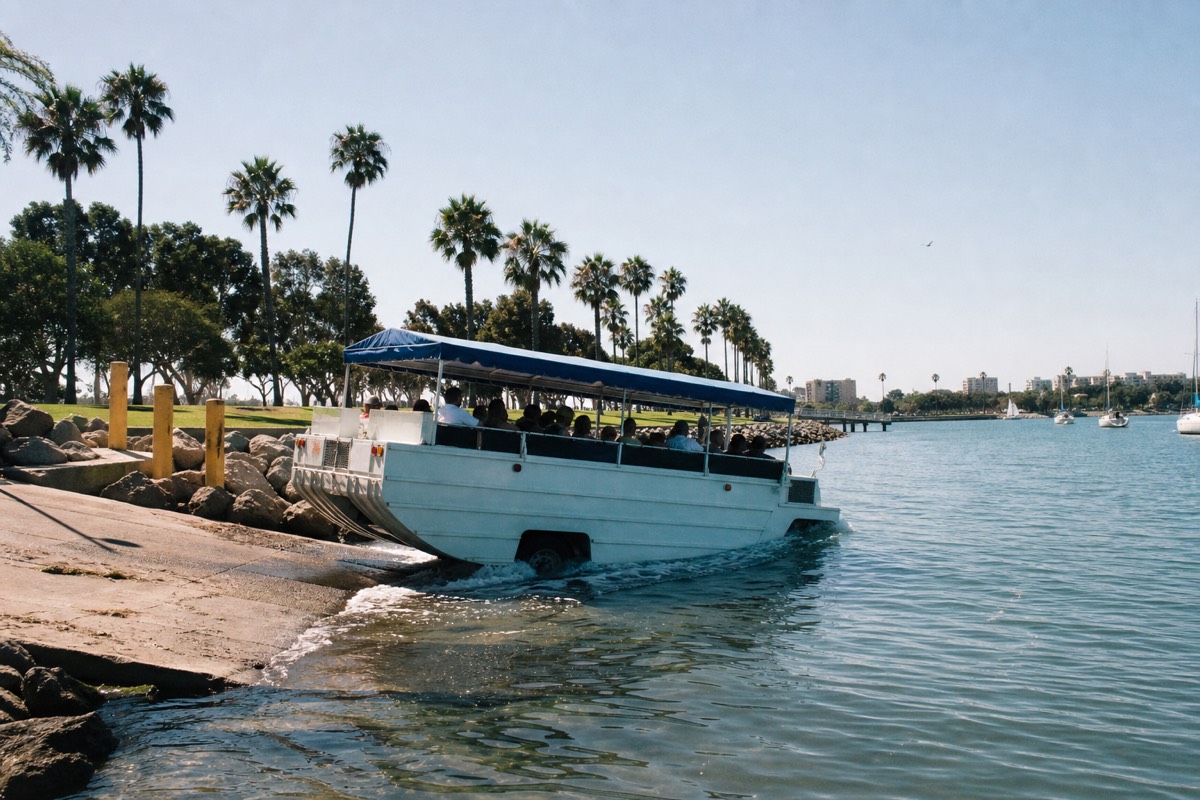
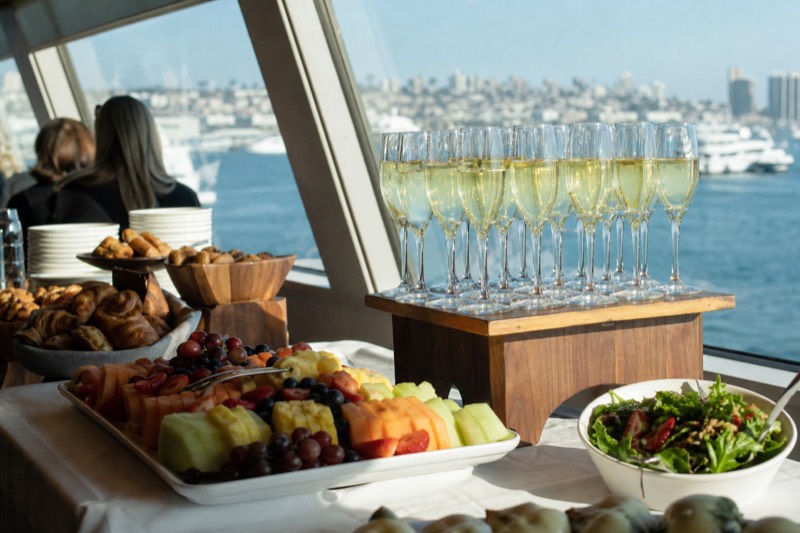
Two alternatives are worth a look for specific situations. The amphibious SEAL tour splits its 105 minutes between city streets and the water, which suits families who have already walked the waterfront and want to sit down; the SEAL tour explained covers how the split actually feels. And on a weekend morning, a two-hour brunch sailing from 1800 N. Harbor Drive turns the meal and the boat into one item on the schedule instead of two, which is exactly what a compressed day needs. It starts from $100, and dinner and brunch cruises shows which mornings it runs.
If you have
Best fit
Duration
From
Departs from
1 hour
Harbor cruise, north bay version
1 hour
from $37
990 N. Harbor Drive
2 hours
Harbor cruise, full loop
2 hours
from $37
990 N. Harbor Drive
2 hours, weekend, want lunch handled
Brunch sailing, buffet service
2 hours
from $100
1800 N. Harbor Drive
2 hours, travelling with kids
SEAL amphibious tour
1 hr 45 min
from $55.59
825 W. Harbor Drive, Seaport Village
45 minutes and a taste for noise
Jet boat thrill ride
30 minutes
from $45
990 N. Harbor Drive
3 hours or more
Whale watching, not an embarkation-day activity
3 to 3.5 hours
from $34
Point Loma or Mission Bay
Everything in the top five rows leaves from the same downtown waterfront as your ship. The last row does not, and that distinction is the whole reason the table exists. You can compare every cruise on the bay by duration if your window is an unusual shape.
Those starting prices move with the sailing and the season, so open the one that fits your window in the harbor cruise lineup and check the live price and availability for your embarkation date before you build the morning around it. The boat is the only item in the plan with a fixed number of seats.
Which cruise lines sail from San Diego, and where do they go?
Holland America Line, Princess Cruises, Disney Cruise Line, Norwegian Cruise Line and Royal Caribbean all run scheduled departures from San Diego, joined seasonally by lines including MSC, Virgin Voyages, Oceania, Azamara, Crystal and Costa. Itineraries range from three-night Ensenada runs to Panama Canal, Hawaii and world cruises.
San Diego is the southernmost port on the U.S. West Coast, and the schedule reflects it. Short Baja and Ensenada sailings dominate the winter calendar because Ensenada is only 64 nautical miles away, close enough for a three-night round trip to make sense. Longer Mexican Riviera runs reach Cabo San Lucas at 750 nautical miles, Mazatlán at 935 and Puerto Vallarta at 1,048. Northbound, the Pacific Coast and wine country itineraries run up toward San Francisco and the Pacific Northwest.
Disney holds the most settled position of the group. In April 2026 the line extended its homeport partnership with the Port through at least 2031, taking non-exclusive priority access to both the North and South berths at the B Street cruise terminal, with more than a million Disney passengers anticipated across the life of the agreement. If your booking says Disney, B Street is almost certainly where you are going, and it will stay that way for years.
The Port's 2026-27 cruise schedule fills in the near term. It is current as of March 2026 and states plainly that it is subject to change, and it carries Disney Magic and Wonder sailings from September 2026 onward on three to seven night Baja and Mexican Riviera itineraries. The mix below is drawn from that same published schedule and is representative rather than complete. Departure dates move, ships get reassigned, and the only current version is the one the cruise lines publish.
Line
Typical San Diego itineraries
Length range
Royal Caribbean
Ensenada; Catalina and Ensenada; Ensenada, Cabo and La Paz
3 to 7 nights
Disney Cruise Line
Baja; Mexican Riviera; Pacific Coast
3 to 7 nights
Holland America Line
Baja Peninsula; Mexican Riviera and Sea of Cortez; Panama Canal; Circle Hawaii
7 to 35 days
Princess Cruises
Classic California Coast; Pacific Wine Country; Panama Canal
4 to 16 days
Norwegian Cruise Line
Mexican Riviera round-trip: Cabo San Lucas with Mazatlán or Puerto Vallarta
6 to 7 days
Seasonal and luxury lines
Grand voyages, San Diego to Lima, world cruises
9 to 139 days
If your sailing calls at a Mexican port, and most short ones do, a passport is required. That rule is set by the cruise lines and border authorities rather than the Port, and it applies even to a three-night hop that never leaves sight of the Baja coast. The related question of whether you can reach Mexico by boat any other way has a shorter answer than most people expect, covered in Can you take a boat from San Diego to Mexico?
Where should you stay the night before a San Diego cruise?
Stay inside the downtown waterfront ring if you can. Hotels across the street from the terminals exist, and three of them have garages managed as cruise parking. Anything within the Embarcadero and Gaslamp area puts you within a walk or a short ride of the pier, with luggage storage on the day.
I keep this general on purpose, because hotel inventory and pricing change faster than any page can track and I am not going to hand you a stale list. What does not change is the geography. The Embarcadero is a two-mile strip, the terminals sit near its northern half, and the density of hotels, restaurants and museums drops off sharply once you go more than a few blocks inland or south past the convention center.
Three practical filters, in the order I would apply them. Does the hotel hold luggage after checkout? Is it walkable to the pier, or does it need a ride, and is that ride a five-minute one or a twenty-minute one? And does it have parking you can leave a car in for a week, or are you solving that problem separately? The airport-adjacent hotels answer the third question well and the second one poorly. The downtown ones tend to do the reverse.
One more consideration if you are arriving in late May or June. The marine layer that locals call May Gray and June Gloom sits over the coast most mornings in that window, often burning off by afternoon. It does not affect boarding, but it does change what a morning walk on the waterfront looks like, and it makes the water noticeably cooler and windier than the forecast temperature suggests. What to wear on the water goes into the layering in more detail, and it applies just as much to a pre-cruise bay loop as to a full sightseeing day.
What catches people out on embarkation day?
The recurring problems are self-inflicted: arriving hours early, booking a boat that leaves from the wrong side of town, assuming the pier has parking, and leaving the passport in a checked bag. None of them are hard to avoid once you know the geography.
What follows is judgment rather than Port policy, and it comes from watching the same mistakes repeat on the same sidewalk. Take it as advice from someone who books people onto boats, not as an official rule.
The first is the whale watching mistake. San Diego has genuinely excellent whale trips, gray whales from December through April and blue whales from mid-May into September, and people quite reasonably want one. But those boats leave from Point Loma and Mission Bay, they run three hours or more on the water, and the return is not guaranteed to the minute because the ocean does not work that way. Save it for the day after you disembark, or for a different trip entirely, and read whale season month by month when you plan that one.
The second is treating the two-hour harbor loop as a two-hour commitment. It is closer to three by the time you have found the dock, boarded, sailed, disembarked and walked back. Build the extra hour in.
The third is a small one that costs real money. Free cancellation up to 24 hours ahead is standard across the bay operators, which means booking in advance is close to risk-free. Waiting until you land, then discovering a Saturday morning departure has sold out, is the expensive version of the same decision. Ten minutes on the harbor cruise lineup the week before is the cheap one.
The last is the document shuffle. Photo ID, boarding document, passport or birth certificate, all in hand and not in the case a porter is about to take. The Port lists this plainly across its cruise planning pages, and it is the one instruction here that has no workaround.
What else do people ask about the San Diego cruise terminal?
The five questions below cover almost every message I get about embarkation day in San Diego: airport shuttles, parking at the pier, how early is too early, passport rules for Mexico sailings, and whether a bay cruise really fits into the hours before boarding. Short answers, all of them.
Is there a free shuttle from San Diego airport to the cruise terminal?
Not one run by the Port. Some cruise lines offer a paid airport transfer, and some off-site parking operators run free shuttles for their own customers. For everyone else the practical options are taxi, rideshare, or MTS route 992, which covers the corridor in about fourteen minutes and runs every fifteen minutes.
Can I park at the cruise terminal during my cruise?
No. Passengers may not park on the pier, and long-term parking is not available at the terminals. The Port does not own or operate cruise parking at all. Reserve a spot with one of the off-site operators before you travel, and check the vehicle size limits, because several lots cap length or height.
How early can I get to the cruise terminal?
The Port asks passengers not to arrive before 10 a.m., and to turn up at the boarding time on their documents rather than earlier. Terminals operate under U.S. Coast Guard security standards and check-in runs on a schedule, so early arrival buys waiting time, not a head start.
Do I need a passport for a cruise from San Diego?
For any sailing that calls at a Mexican port, yes, and that covers most short itineraries out of San Diego. The Port states plainly that passports are required for Mexico cruises. Bring photo ID and your ship boarding document as well, and keep all of it out of your checked luggage.
Is a bay cruise worth doing on embarkation day?
If you have two or more spare hours and your bags are stored, yes. The one-hour and two-hour harbor loops leave from 990 N. Harbor Drive, minutes from both terminals, and they show you the inside of the bay that your ship will not. Free cancellation up to 24 hours ahead removes most of the risk if a flight slips.
Fill the gap before you board
The general pick is the narrated loop from 990 N. Harbor Drive, minutes from both terminals: one or two hours past the carrier and the fleet, 4.5 from more than 3,200 reviews, from about $37.
San Diego Harbor Cruise
★ 4.5 · 3,262 verified reviews
Have a boarding day in mind? Check the live price and departure time for the boat that fits your window, since the boat is the only item in the plan with fixed seats.
2 hours · Departs 990 N Harbor Dr, San Diego, CA 92101, USA · Free cancellation up to 24 hours
1 hour 45 minutes · Departs 825 W Harbor Dr, San Diego, CA 92101, USA
A bus that drives into the bay. The amphibious SEAL vehicle rolls through downtown, then splashes down for the water half of the loop: about 40 minutes on streets, an hour afloat.