What to Wear on a San Diego Boat Tour: Dressing for the Marine Layer
It is 75 degrees on the Embarcadero and people are eating ice cream in shorts. Twenty minutes later the same people are on an open deck at 12 knots, and half of them are cold.
By David Ramirez, San Diego Bay cruise specialist & harbor experience guide
Short answer
Dress one layer warmer than the street for any San Diego boat tour. Bay water sits around 58°F in winter and 72°F in late summer, which holds the air over it cooler than downtown, and a moving boat adds its own wind. A windproof outer layer, closed shoes and something to keep sunglasses and hats attached covers almost every trip on the bay.
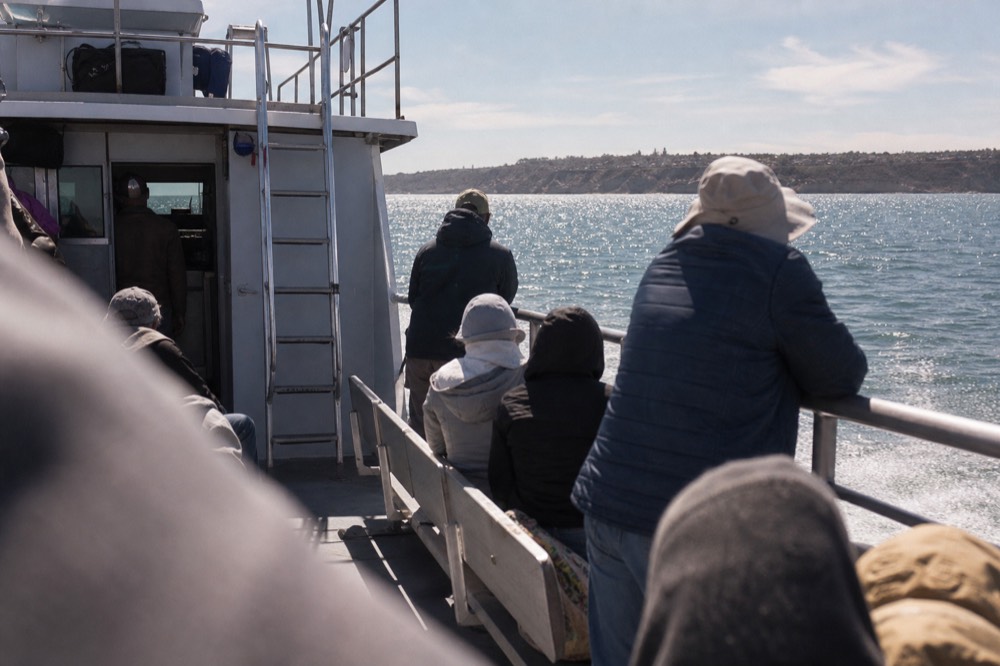
You can spot the visitors on the Broadway Pier by what they are carrying. Nothing. It is a beautiful afternoon, the walk from the hotel was warm, and the boat is right there. Forty minutes later, out past Point Loma with the sea breeze filling in, those same people are standing in the lee of the wheelhouse with their arms crossed, having handed the one jacket in the group to whoever complained first.
San Diego is genuinely mild. The bay is a different climate, and the gap between them is the whole subject of this guide. The good news is that the fix is small: one windproof layer and a bit of thought about shoes covers almost everything. The bad news is that nobody tells you before you book.
Why is San Diego Bay colder than the street you just walked from?
Three things stack up. The water is cold, and it cools the air sitting on it. The sea breeze runs strongest in the afternoon, exactly when most tours sail. And the boat adds its own wind: at 12 knots into a 10-knot breeze, you feel more than 20 knots across the deck. Together they routinely take ten degrees off a pleasant afternoon.
The water is the part people underestimate. Bay temperatures measured at the tide station inside San Diego Bay averaged under 60°F for the first three months of last year and only crossed 70°F in July. The open coast off Point Loma runs colder still through winter and spring, which matters because that is where the whale boats go.
Month
Average air high (downtown)
Bay water
Open coast water
January
66°F
58°F
56°F
February
66°F
60°F
58°F
March
67°F
61°F
58°F
April
69°F
62°F
59°F
May
70°F
66°F
65°F
June
72°F
68°F
66°F
July
75°F
70°F
66°F
August
77°F
72°F
70°F
September
77°F
71°F
67°F
October
75°F
68°F
64°F
November
71°F
66°F
65°F
December
66°F
63°F
63°F
Air figures are the long-run 1991 to 2020 normals for San Diego International, from the NOAA climate normals. Water figures are annual averages from the NOAA tide stations inside the bay and out at the open coast; the bay station's page is at tidesandcurrents if you want to look up conditions for a specific day.
Read the two water columns side by side and one planning point falls out. Between January and April the bay is running two to four degrees warmer than the ocean outside the point. A sheltered harbour loop and an open-ocean whale trip in the same week are not the same clothing problem.
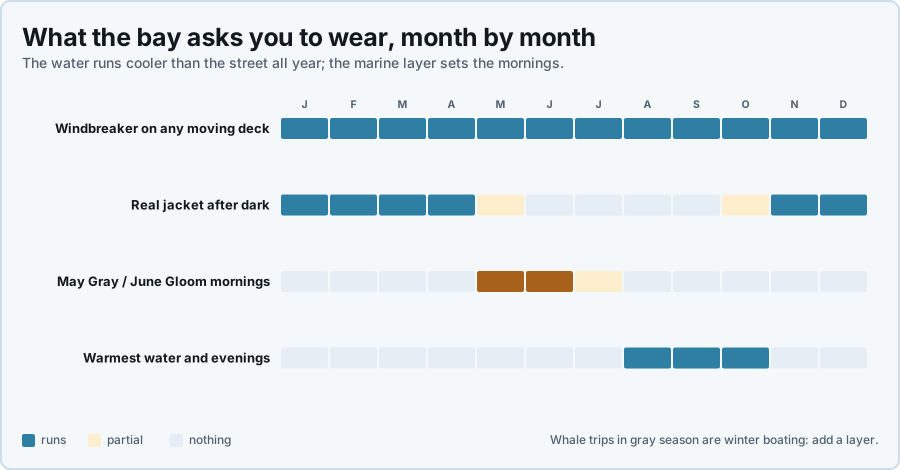
One windproof outer layer solves most of it. The season decides what goes underneath.
Which months does the marine layer actually take over?
Late May through the first half of June, reliably, and often well into July. May Gray and June Gloom describe a coastal marine layer that forms overnight, holds a grey lid over the shoreline through the morning, and usually thins by afternoon. Air temperatures stay mild throughout, which is why people misjudge it: it is not cold, it is damp, still and sunless.
The long-term climate record shows the effect without anyone having to describe the sky. Take each month's average daytime high and subtract its average overnight low, and May and June come out with the smallest day-to-night spread of the entire year, around nine degrees. December and January run at sixteen. The sun in June is at its most powerful and the air barely warms, because there is a lid on it.
Period
Typical sky
Day-to-night spread
What to pack for it
Late May to mid June
Grey most mornings, thinning in the afternoon, often rebuilding at dusk
About 9°F
Windproof shell, long sleeves, no sunglasses fantasy
Mid June to August
Burns off earlier, hazy warm afternoons
9 to 11°F
Light layer you can tie round your waist, real sun protection
September to November
The clearest, warmest stretch of the year on the water
11 to 16°F
One mid layer, added at sunset rather than at boarding
December to April
Sharp light, clean horizons, coldest decks
12 to 16°F
Proper jacket, hat, something warm for the return leg
September and October are the local secret. The layer has broken, the water is still holding summer heat, and the light is the best of the year. If a trip is flexible, that is the window, and it happens to overlap nothing awkward: the blue whales are winding down and the grays have not started, so whale season month by month is worth a look before you commit to a date.
What should you wear, season by season?
A three-layer system covers every month here: something long-sleeved next to you, a fleece or sweater in the middle, and a windproof shell over the top. In summer you may carry the shell rather than wear it. In January you will want all three, plus a hat, from the moment the boat leaves the dock.
The key word is windproof rather than warm. Most people's mistake is a chunky knit with nothing over it, which the sea breeze goes straight through. A thin nylon shell over a t-shirt beats a heavy sweater on its own, every time.
Season
Base
Mid
Outer
Extras
December to February
Long sleeves
Fleece or sweater
Windproof jacket
Beanie, thin gloves for an evening sail, scarf
March to April
Long sleeves or t-shirt
Light fleece
Windproof shell
Sunglasses with a retainer, sunscreen
Late May to June
T-shirt, long-sleeve over it
Light layer
Water-resistant shell
Hat that will not blow off; the grey burns off later than you think
July to August
T-shirt
Carry a light layer
Shell only for evening trips
Sunscreen, hat, water; the sun is stronger than the haze suggests
September to November
T-shirt or long sleeves
Fleece for evening
Shell after sunset
The one season where daytime trips need almost nothing
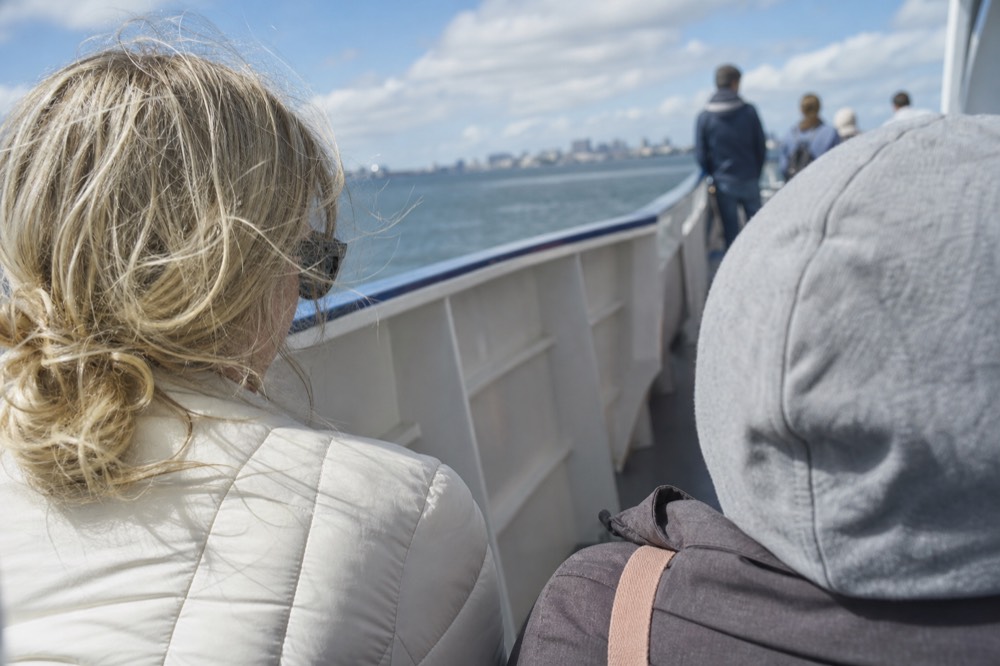
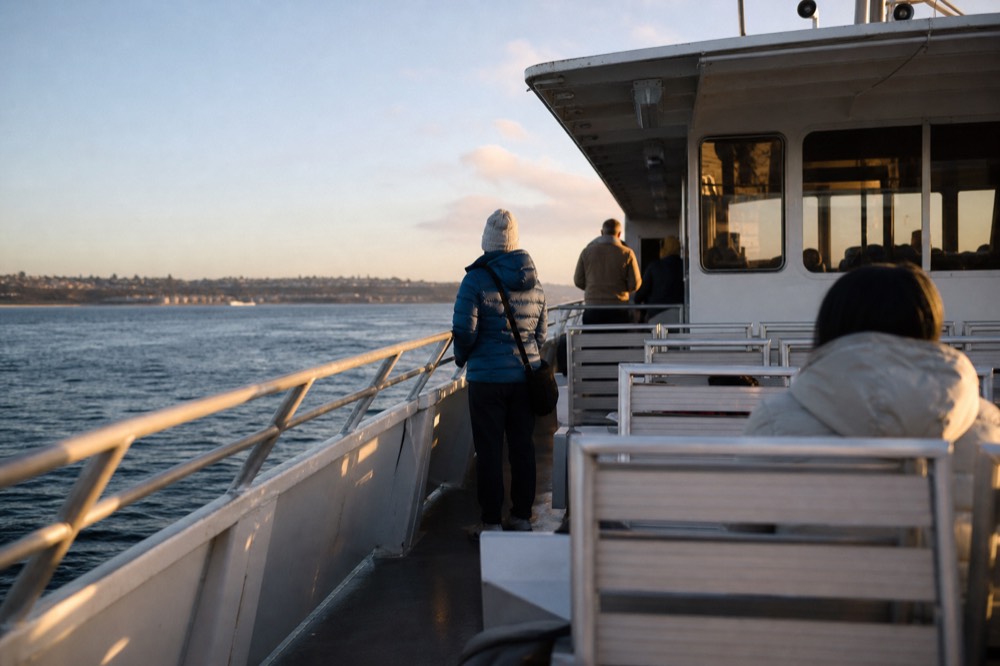
Two additions that apply all year. Bring a scrunchie or a cap you do not mind losing, because long hair on a moving deck is genuinely annoying and hats go overboard constantly. And take one more layer than you think for anything ending after dark. The temperature drop when the sun goes is quick, and on a sunset sail it lands right when the good part starts. There is a full sunset timetable in when sunset actually falls if you are planning an evening trip around the light.
Late 2026 gives people three specific reasons to still be outside once the sun has gone: a supermoon on November 24, the Geminid meteor shower peaking all night on December 13 and 14, and the Ursids on December 21 and 22. Standing still on a dark December deck is a different problem from standing on one at four in the afternoon, and the fix is a hat and a genuinely windproof jacket rather than another sweater. If you are booking one of those nights, the sunset and evening sails run from $42 for the short Mission Bay loop up to $125 for the two-and-a-half-hour Harbor Island sail, and the longer you are out there the more the jacket earns its place in the bag.
What do you wear on each type of boat?
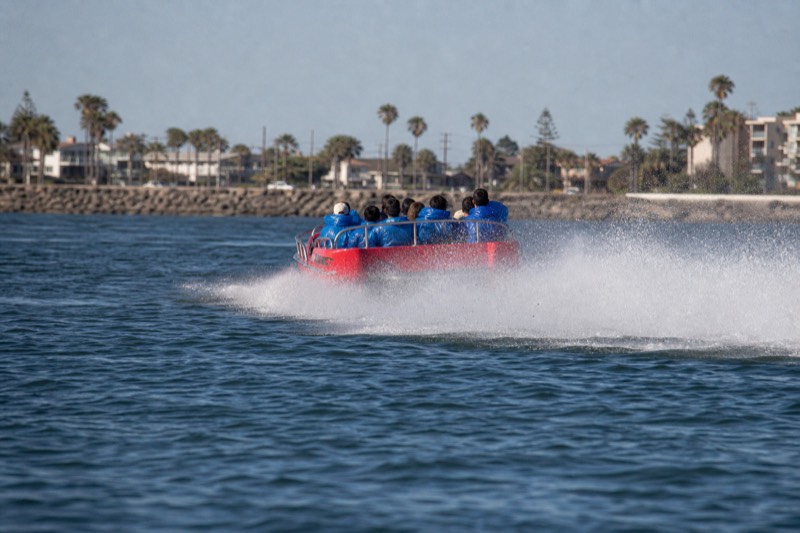
Exposure varies enormously. A jet boat will soak you and hands out ponchos. A dinner cruise has an interior you can retreat into. The amphibious SEAL vehicle is open-air, and the operator itself advises a lightweight jacket. Match the clothing to the boat, not to the weather app.
Trip type
Duration
Exposure
Wear
Skip
Harbor sightseeing loop
1 to 2 hours
Open upper deck, sheltered lower deck
Layers you can shed; windproof top
Anything you have to hold onto
SEAL amphibious tour
About 1 hour 45
Open-air vehicle on road and water
Comfortable clothes plus a lightweight jacket, per the operator
Loose hats; and use the restroom first, there is none aboard
Whale watching
3 to 3.5 hours
Open ocean past the point, full exposure
Full three layers, warm hat, closed shoes
Skirts, sandals, and a big breakfast if you get seasick
Dinner cruise
About 2.5 hours
Interior dining plus open decks
Smart casual, with a jacket or wrap for the deck
Heels on the exterior top deck
Sunset sail
About 2 hours 30
Fully exposed sailing yacht
Layers, windproof shell, soft-soled shoes
Anything white; and no umbrellas
Jet boat thrill ride
30 minutes
Open boat, spins and spray
Clothes you accept will get wet; ponchos are provided
Phones loose in a pocket, good shoes, contact lenses if you can help it
Gondola, Coronado Cays
50 minutes
Sheltered canals, no wind, no engine
One layer more than dinner; shared lap blankets are provided
Nothing; this is the mildest boat on this list
The jet boat deserves its own warning. Thirty minutes does not sound long enough to matter, but the ride is built around spins and spray, ponchos are handed out for a reason, and people still turn up in the outfit they planned to have dinner in. If that sounds like fun rather than a hazard, the jet boat option covers what the ride is actually like, from around $45. If it does not, the harbor cruise lineup does the same waterfront at a civilised temperature, from $37.
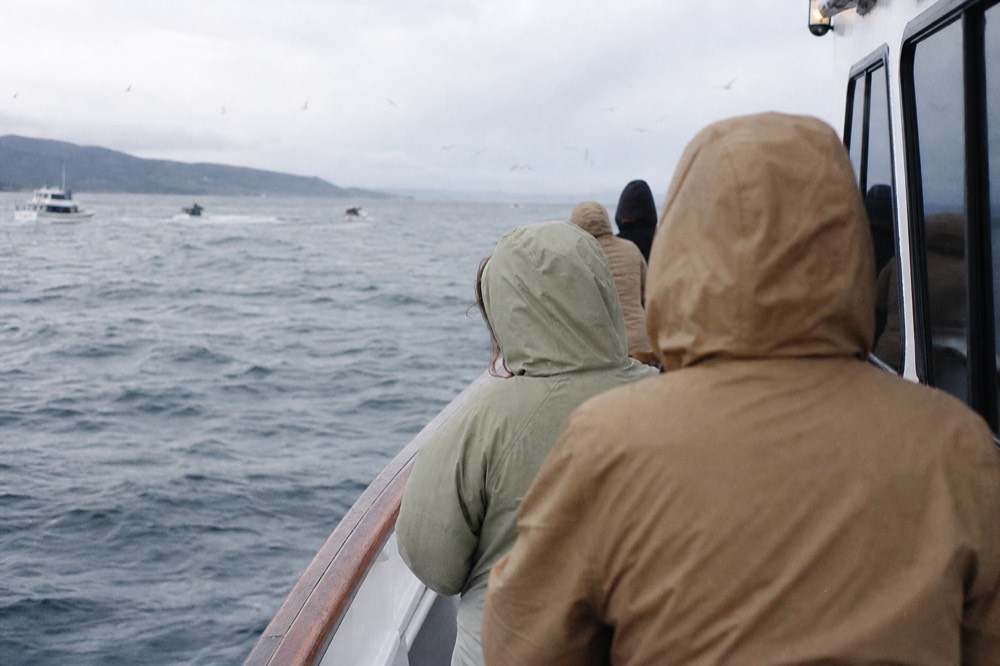
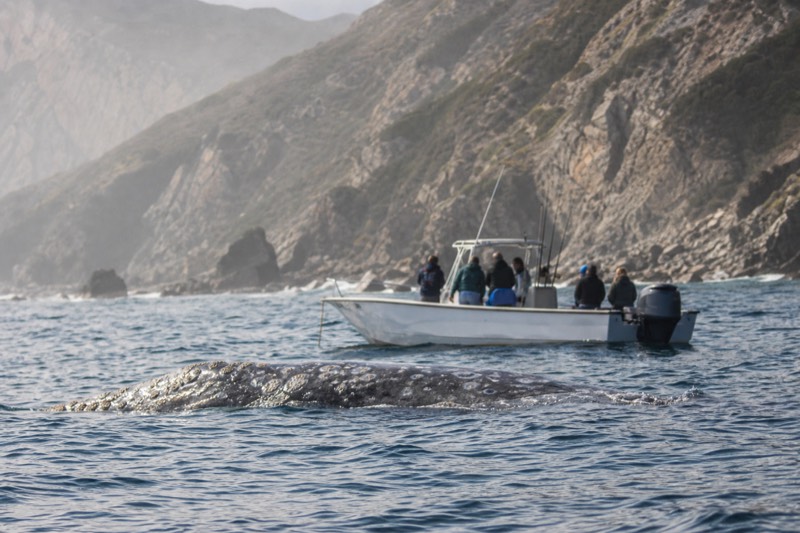
The whale boats sit at the other end. Three and a half hours in open Pacific with nowhere indoors to hide, in months when the ocean is running in the fifties, is the one trip on this list where getting it wrong ruins the day. The whale watching boats all run long and all run out past the point, from $34 on the three-hour trip and $63 on the luxury vessel. Pick the boat before you pack the bag, and check the live price and departure time for your date on the listing while you are there, because a 9am sailing in February and a 1pm one in September need different clothes on the same body.
What does the boat hand you, and what do you bring yourself?
Very little is provided. Ponchos come with the jet boat, shared lap blankets with the gondola, and the three-hour whale boat out of Mission Bay has an indoor cabin you can warm up in. Beyond that, no operator on this bay lends out jackets, and the amphibious SEAL vehicle has no restroom aboard at all.
That last detail is worth planning around properly. The SEAL route runs about an hour and forty-five minutes with no facilities on the vehicle, and check-in closes half an hour before departure at Seaport Village, so the sensible order is park, use the restrooms at the departure point, then join the line. The operator recommends arriving a full hour early in peak season, which is dead time you can spend usefully rather than standing in the sun.
The gondola's blankets are worth a footnote, because they are shared out rather than issued one each. That matters most in December, when the operator adds family-style Holiday Gondola Rides through the Coronado Cays canals from December 2 to 23, 2026, carrying up to fourteen people instead of the usual private six. Fourteen people sharing what six normally share is not arithmetic I would rely on at nine in the evening. Take your own layer.
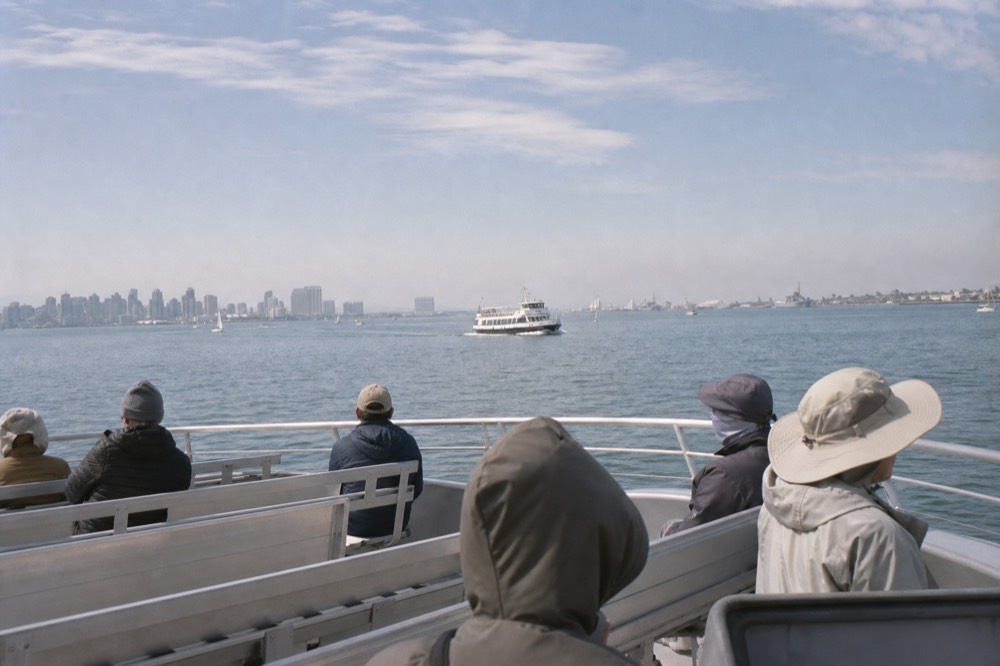
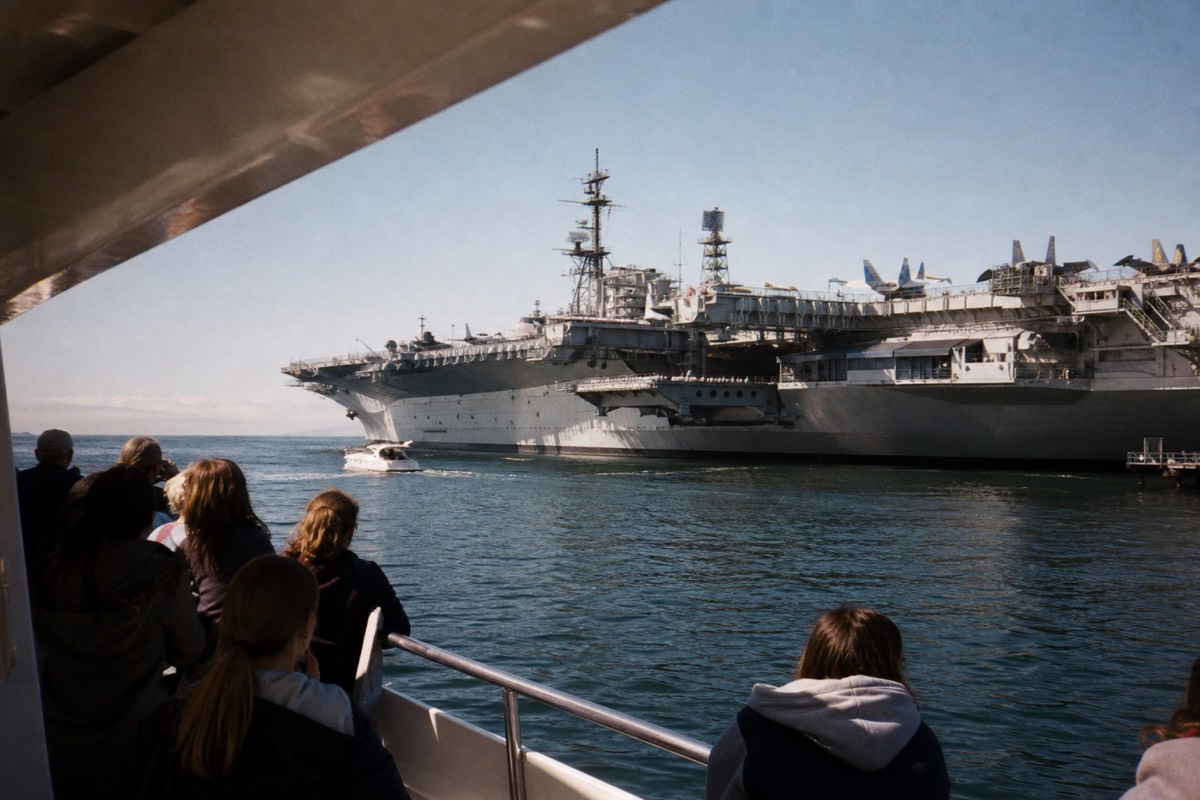
Shelter varies more than the listings suggest. The big sightseeing boats have a sheltered lower deck and a rail-lined open top, so you can move between the two whenever the wind gets tiresome. Dinner cruises board half an hour before departure and have a proper interior with tables, which makes them the warmest option on this list after the gondola. The sailing yachts and the catamaran have no meaningful indoor space at all: what you wear aboard is what you have for the whole two and a half hours. The smaller whale boat out of Point Loma runs a naturalist on deck rather than a cabin, so treat it as fully exposed.
Water is the other gap. Some boats sell drinks, some do not, and a three-hour trip in the sun without a bottle is a slow mistake. Bring one and bring a second for children, who get cold faster than adults and dehydrated faster too, and who will spend the entire trip at the rail in the wind because that is where the interesting bit is.
What shoes actually work on a boat?
Closed, flat and soft-soled. Decks get wet even on a calm day, and a wet fibreglass or varnished deck with a hard heel on it is the most common minor injury on any of these trips. Boat shoes, trainers and flat rubber-soled sandals with a back strap all work. Heels, hard soles, flip-flops and brand-new white anything do not.
Footwear
Verdict
Why
Trainers or sneakers
Best all-round
Grip, warmth, closed toe; fine on every boat here
Deck shoes
Ideal on the sails
Designed for wet non-slip decks, and they will not mark them
Flat sandals with a heel strap
Fine in summer
Grip is adequate, toes are exposed, feet get cold quickly after sunset
Flip-flops
Avoid
No grip wet, come off in a hurry, useless on a jet boat
Heels
Avoid, including on dinner cruises
The exterior decks are where the view is, and that is where they fail
Hiking boots
Overkill but harmless
Warm and grippy, just heavy and hot for a two-hour loop
Bare feet
Only if crew invite it
Some sailing operators prefer it; wait to be told
On a dinner cruise this one comes up constantly. People dress for the restaurant and then discover the whole reason to be there is the open deck. Carry flats and change at the top of the gangway. Nobody will notice, and you will actually go outside.
Is there a dress code for a San Diego dinner cruise?
Smart casual is the practical answer. The operators do not publish a hard dress code for the nightly dinner cruise, and nobody is turned away for wearing jeans. The real constraint is not formality but wind: these boats have open decks and an exterior top deck, and the view you paid for is out there.
Look at what an evening on the water actually involves. You board half an hour before departure, you sit down to three courses, and between courses you go outside to look at the skyline while the boat is moving in a night breeze over sixty-degree water. A cocktail dress alone is a miserable outfit for that. The same dress with a wrap, or a shirt with a jacket over it, is exactly right.
The dining sailings split into a buffet-style evening cruise and a plated gourmet option, plus a daytime brunch cruise that is warmer and brighter and considerably more forgiving on clothing. The operator's own dinner cruise pages list boarding times and what is included, which is worth reading before you decide how far to dress up.
What do visitors always forget?
This is my own judgment from years of watching people board these boats, so treat it as pattern recognition rather than data. The same five things, over and over.
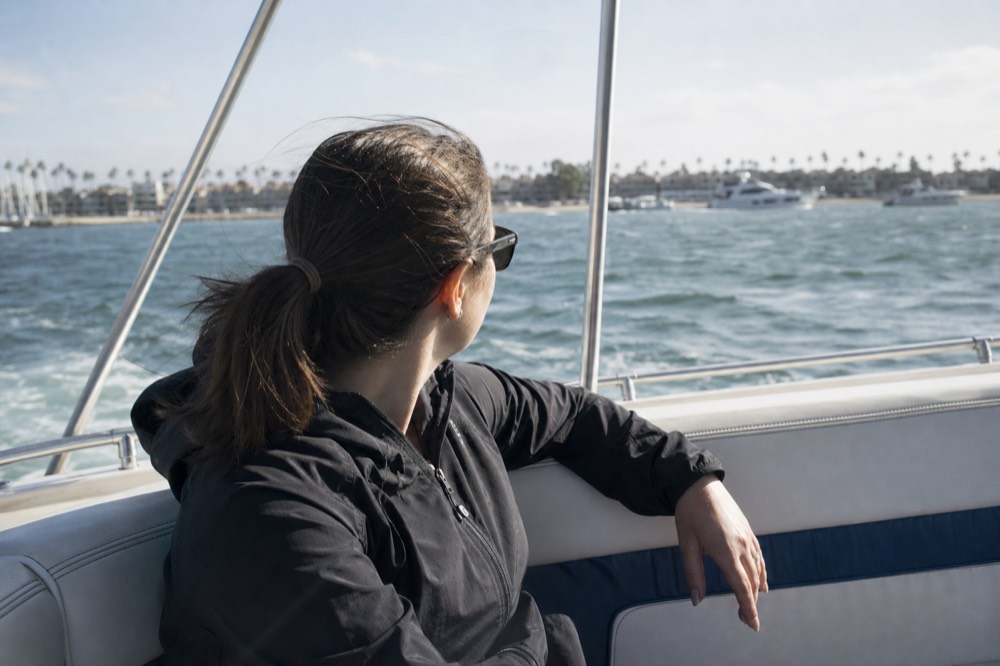
Sunglasses with nothing holding them on. Glare off the water is fierce even under cloud, so you will wear them, and a moving deck plus a gust is how sunglasses end up in the bay. A cheap retainer cord solves it.
Sun protection on a grey day. This is the big one during May and June. The marine layer blocks the view, not the ultraviolet, and people who would never sit on the beach for two hours without sunscreen will stand on an open deck for exactly that long because it looks overcast. Water reflects light back up at you as well. Sunscreen goes on before boarding, not when you notice.
Nothing to keep a hat on. Same physics as the sunglasses, worse outcome, because hats float away where sunglasses just sink.
Cash or a card for the bar and the crew. Most of these boats sell drinks and most crews work partly for tips. On a short trip nobody thinks to bring anything.
A layer for the return leg. Every itinerary on this bay is warmer on the way out than on the way back. The SEAL tour operator's own FAQ makes the same point about its land portion, which surprises people, because it is the road section rather than the water where the open-air vehicle gets cool.
The one-bag packing list for any boat on the bay
If you take nothing else from this, take the bag. It weighs almost nothing and it covers every trip listed on this site.
A windproof shell, a thin fleece, sunglasses on a cord, a hat that clips or stuffs into a pocket, sunscreen, a bottle of water, a card for the bar, and closed flat shoes on your feet rather than in the bag. For a whale trip, add a warmer hat and take motion sickness tablets an hour before you sail rather than when you start to feel it. For a jet boat, subtract everything except what you are prepared to have soaked, and leave the rest in the car.
Then stop thinking about it. Once you are dressed for the water, the difference between a good trip and a cold one disappears entirely, and you spend the two hours looking at the city instead of at the door to the cabin.
If you have not chosen a boat yet, all 14 bay cruises sit side by side with their real ratings, and the classic narrated loop is the safest first booking: 4.5 across more than 3,260 reviews, one or two hours, open decks with somewhere warm to stand, from around $37. Book the harbor sightseeing options. For an evening instead, the sunset and evening sails need one more layer than anything else here, and the fifty-minute Coronado Cays gondola needs the least of all, because it never leaves the shelter of the canals.
Questions about dressing for San Diego Bay
Do I need a jacket for a San Diego harbor cruise in summer?
Carry one, even in August. Daytime loops in July and August are often comfortable in a t-shirt, but the upper deck is where the view is, the boat makes its own wind, and any departure after about 5pm gets cool on the way back in. A light shell that packs down to nothing is enough.
What should I wear whale watching in San Diego?
Full layers, whatever the month. These trips run three to three and a half hours into open ocean, where the water sits in the high fifties from January through April. Long sleeves, a fleece, a windproof outer layer, a warm hat and closed shoes. If you are prone to motion sickness, take something for it an hour before boarding rather than once you are out there.
Is there a dress code for a dinner cruise on San Diego Bay?
No hard dress code is published, and smart casual is the norm. Dress for a nice restaurant, then add a jacket or wrap, because the open decks are the reason to go and they are cool at night. Flat shoes rather than heels, since the exterior top deck is where everyone ends up standing.
How cold does San Diego Bay get?
Water inside the bay averaged around 58°F in January and about 72°F in August over the last full year of readings from the NOAA tide station. Air temperatures downtown stay between roughly 66°F and 77°F all year, so it is the water and the breeze, rather than the season, that decide how cold a boat feels.
What months are May Gray and June Gloom, and does it matter on a boat?
Late May through the first half of June most reliably, sometimes stretching into July. The layer typically forms overnight and thins in the afternoon. On a boat it means a soft grey sky rather than cold: pack a windproof layer and, more importantly, sunscreen, because the ultraviolet gets through the cloud even when the view does not.
Which boat is the bag for?
The general pick is the classic narrated loop: open decks with somewhere sheltered to retreat to, one or two hours, 4.5 from more than 3,200 reviews, from about $37.
San Diego Harbor Cruise
★ 4.5 · 3,262 verified reviews
Have a travel date in mind? Check the departure time and live price for the boat you are packing for before the bag is closed.
2 hours · Departs 990 N Harbor Dr, San Diego, CA 92101, USA · Free cancellation up to 24 hours
3 hours 30 minutes · Departs 2803 Emerson St, San Diego, CA 92106, USA
A year-round wildlife run out of Point Loma with a small-boat feel: gray whales in winter, blues in summer, and common dolphin pods on most trips in between.