San Diego Sunset Cruise Timing 2026: The Golden-Hour Calendar
Sunset here moves more than three hours across the year. Book the wrong month against the wrong departure time and you either board in daylight or dock in the dark.
By David Ramirez, San Diego Bay cruise specialist & harbor experience guide
Short answer
San Diego sunset falls at about 4:42pm in the first days of December and 8:01pm in late June, with the biggest single jump coming overnight when daylight saving starts in March. Usable light lasts roughly 25 to 29 minutes past sunset all year, so a golden-hour sailing wants to be on the water at least an hour before the sun touches the ridge.
The question I hear most often on Harbor Island has nothing to do with boats. People want to know what time the sun goes down, because they have already booked a table somewhere afterwards and they are quietly working out whether the two things collide. It is a fair worry. San Diego's sunset swings by more than three hours between December and June, the clocks move twice, and the marine layer can pull a grey curtain across the whole performance in the exact weeks when visitors assume Southern California is at its sunniest.
Nobody tells you any of this when you are looking at a listing photo. So here is the calendar, built from the US Naval Observatory's own sun tables rather than from a rounded number somebody remembered, along with what each part of the year actually looks like from a deck.
What time does the sun set in San Diego, month by month?
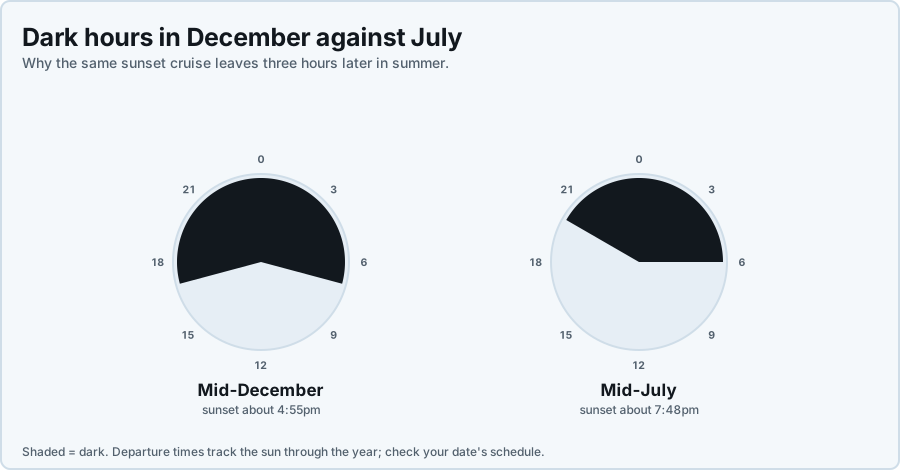
San Diego's sunset bottoms out at 4:42pm in the first days of December and peaks at 8:01pm around the end of June, a spread of three hours and nineteen minutes. Every month in between moves by ten to twenty minutes, except March, when daylight saving adds an hour overnight and resets the entire evening.
The table below gives the sunset time on the 1st and the 15th of each month, plus the moment the last usable light goes. Times are computed for downtown San Diego at the water. January through August are 2027 dates and September through December are 2026 dates, which is simply the next twelve months from now; sunset repeats within about a minute from one year to the next, so the pattern holds whichever year you are reading this in.
Month
Sunset, 1st
Sunset, 15th
Last usable light (mid-month)
January
4:54pm
5:05pm
5:32pm
February
5:21pm
5:34pm
5:59pm
March
5:46pm
6:57pm
7:21pm
April
7:09pm
7:19pm
7:44pm
May
7:30pm
7:41pm
8:08pm
June
7:52pm
7:58pm
8:27pm
July
8:01pm
7:57pm
8:25pm
August
7:47pm
7:34pm
8:00pm
September
7:13pm
6:55pm
7:19pm
October
6:33pm
6:15pm
6:40pm
November
4:58pm
4:47pm
5:14pm
December
4:42pm
4:44pm
5:11pm
November and December hand you the shortest evenings of the year and the earliest dinner reservations you will ever make in a city this far south.
Two things in that table surprise people. The first is that the darkest evenings arrive in early December rather than at the solstice: sunset is already climbing again by December 15, even though the days keep getting shorter, because sunrise is still sliding later. The second is that July 1 beats the solstice. The latest sunset of the year is not June 21. It sits at 8:01pm and holds from roughly the last days of June into the first week of July.
The sun sets three hours later in July than in December, and the usable light after it goes barely changes at all.
When do the clocks change, and what breaks when they do?
Daylight saving ended on November 1, 2026 and starts again on March 14, 2027. The March change is violent for evening cruises: sunset moves from 5:55pm on the Saturday to 6:56pm on the Sunday. Any sunset departure booked either side of that weekend shifts by an hour, and the operator's calendar is the only place showing the real time.
This catches locals as often as visitors. A sunset sail is not a fixed 6:30pm product. Operators reset the departure every week or two so the boat is in open water when the light turns, which means the time printed on a page you looked at in February is not the time you will sail in April.
Moment in the year
Date
Sunset
What it does to an evening cruise
Earliest sunset
December 1 to 4, 2026
4:42pm
Sunset departures leave in mid-afternoon; you are back ashore by 6pm
Clocks go back
October 31 to November 1, 2026
5:58pm, then 4:58pm
An hour vanishes overnight; November evening sails move to late afternoon
Clocks go forward
March 13 to 14, 2027
5:55pm, then 6:56pm
The evening reopens; sunset sails return to a normal dinner-adjacent slot
Latest sunset
June 28 to July 4, 2027
8:01pm
Boarding around 6:30pm, ashore near 9pm, dinner after that
Clocks go back again
November 6 to 7, 2027
5:54pm, then 4:53pm
Same shock as 2026, one week later in the month
The practical rule I give people: pick your month first, then let the boat tell you the hour. On a 2.5-hour sail you want the sun to drop with the boat already out past the point where the skyline lines up, not while you are still motoring out of the fairway. Operators know this better than any published table does. Check the golden-hour boats for the departure attached to your actual date rather than assuming last month's time.
How long does the light last after the sun drops?
Usable light after sunset is remarkably stable in San Diego: civil twilight ends 27 minutes after sunset in mid-December and 29 minutes after it in mid-June. Unlike the sunset time itself, which moves by hours, the afterglow window barely moves at all. That half hour is the part most people underrate and photograph best.
At 32 degrees north the sun drops at a steep angle, so the long lingering dusk you get in Seattle or London never happens here. What you get instead is a fast, saturated fade: the sky behind Point Loma goes orange, then a hard pink band, then blue, and the city lights on the Embarcadero come up while there is still colour in the west. On a boat this is the best twenty minutes of the trip and the exact moment half the deck goes below for a jacket.
Run the numbers across the seasons and the window holds steady: 27 minutes on December 15, 25 minutes on April 15, 29 minutes on June 15, 24 minutes on September 15. Winter's afterglow is not meaningfully shorter than summer's. Only the hour it happens at changes.
That matters when you are choosing between a 50-minute ride and a 2.5-hour sail. A short trip can miss the whole thing by fifteen minutes. A longer sail out of Harbor Island brackets it comfortably: you leave in daylight, watch the colour work through, and come back past a lit skyline. That is what the classic sunset sail is built around, and why it holds a 4.9 rating across 356 reviews on its listing. It opens from around $125, and the departure attached to your date is set by the sun rather than by a timetable.
Does the marine layer ruin sunset cruises in May and June?
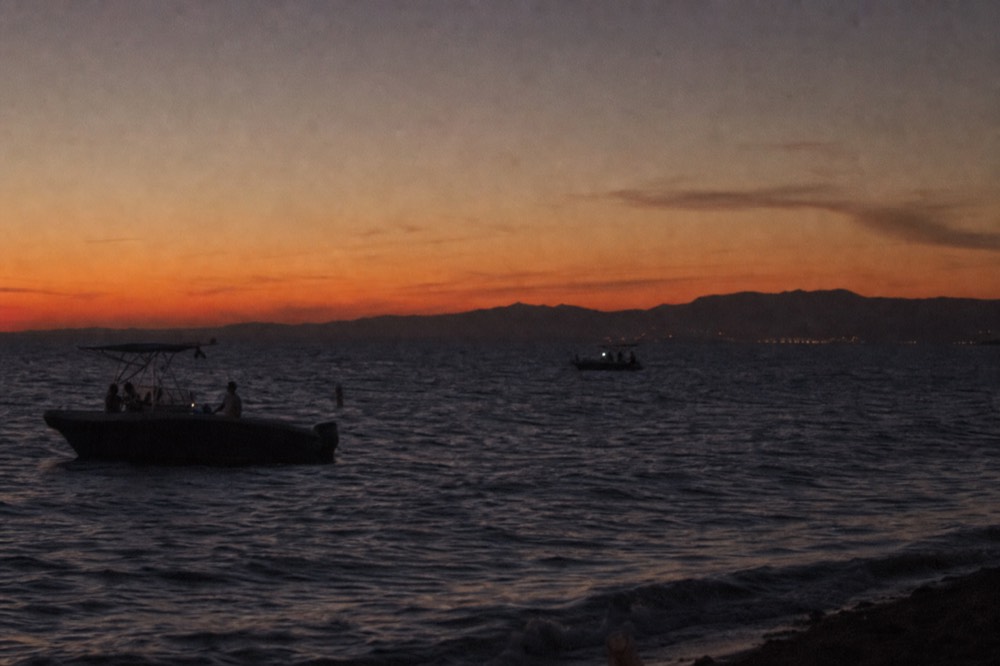
Not usually, but it changes what you see. May Gray and June Gloom describe the coastal marine layer that sits over San Diego from late May into the first half of June, sometimes stretching into July. It typically forms overnight, thins through the afternoon, and rebuilds in the evening. On the water, that often means a soft, diffuse sunset rather than a hard orange disc.
The signature shows up clearly in the long-term climate record. Compare each month's average daytime high against its average overnight low at Lindbergh Field, and May and June have the smallest day-to-night spread of the entire year, around nine degrees Fahrenheit, against sixteen degrees in December and January. The sun is at its strongest, and the air barely warms. That flatness is the marine layer doing its work, capping the heat and holding a lid of stratus over the coast.
Period
Typical sky over the bay
Average day-to-night temperature spread
What it means on deck
December to February
Clearest sunsets of the year, sharpest colour
About 16°F
Cold on the water after dark, but the light is the best you will get
March to April
Mixed, transitional, clearing fast in the afternoon
About 12°F
Reliable golden hour, still a jacket evening
Late May to mid June
Overcast mornings, grey lid that can persist to dusk
About 9°F
Soft, colourless sunsets some evenings, glowing ones on others
July to September
Burns off earlier, hazy warm light
9 to 11°F
The warmest evenings and the latest sunsets of the year
An honest note here, because the listings will not tell you this: nobody can predict a specific evening in early June. The layer can sit two hundred feet thick over the coast and burn back a mile offshore, so a boat out past Point Loma sees a clean horizon while the Embarcadero sits under grey. It can also do the reverse. Every one of these trips carries free cancellation up to 24 hours before departure, which is the real answer to a doubtful forecast: book it, watch the sky the day before, and move it if the whole week looks flat.
Sail or powerboat: which is better at golden hour?
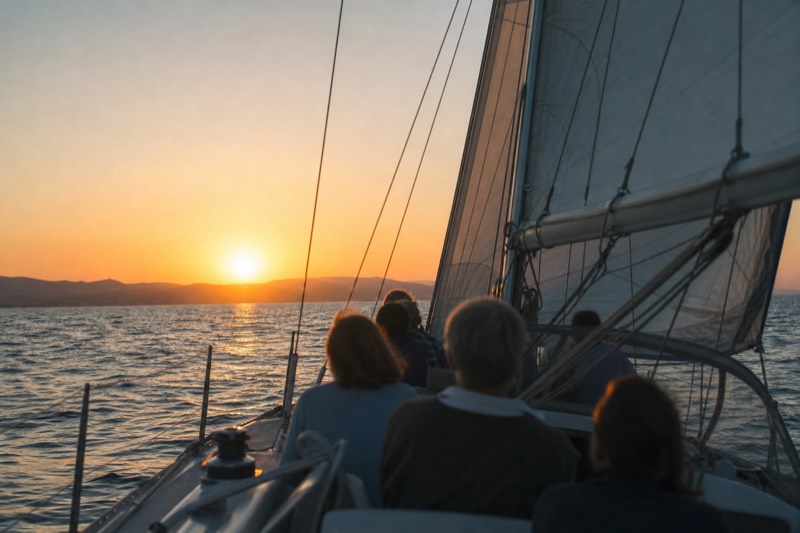
A sailing yacht wins on quiet and on angle. With the engine off you hear water instead of diesel, and a heeling boat holds the skyline at a low, dramatic line that a flat powerboat deck cannot reproduce. A powerboat wins on time: it reaches its viewpoint in ten minutes rather than forty, which suits a short winter evening.
The five golden-hour options on this coast are genuinely different products, not the same trip at different prices.
Boat
Duration
Group
From
Rating
What sunset feels like on it
Classic Sunset Sail
2 hours 30 minutes
Up to 6 guests
$125
4.9 (356 reviews)
Under sail out of Harbor Island, skyline off the stern, engine off for the light
Deluxe Sunset & Day Sail
2 hours 30 minutes
Small group
$119
5.0 (335 reviews)
The one that books out first; day and sunset departures, drinks included
Mission Bay Sunset Cruise
1 hour 15 minutes
Small pontoon boat
$42
4.4 (300 reviews)
Flat calm water, sun into the Pacific dune line, not San Diego Bay
Glow Electric Boat
1 hour
Up to 6 guests
$70
5.0 (21 reviews)
Not a sunset trip at all: an after-dark, LED-lit date run out of Point Loma
Coronado Cays Gondola
50 minutes
Up to 6 guests
$74.37
4.9 (243 reviews)
Residential canals, gondolier standing aft, no skyline in the frame
The two sails leave from the same address on Harbor Island, 955 Harbor Island Drive, which makes them easy to confuse. The difference is character rather than quality: one is a classic yacht capped at six guests, the other a small-group deluxe sail that also runs daytime departures. Both sit at the top of the rating table for anything on this bay.
Money is not really what separates these five. The two long sails open at $125 and $119, the short Mission Bay loop at $42, and every one of those numbers moves with the date you pick. So work the other way round: choose the evening you actually want, then open the sunset and evening sails page, and check the live price and the remaining seats for your date on the listing before you book a table anywhere.
If the sunset is really a backdrop for dinner rather than the main event, the dinner and brunch cruises put the same light outside a window with three courses in front of you, at a longer duration and a different price bracket.
Mission Bay or San Diego Bay: which sunset are you buying?
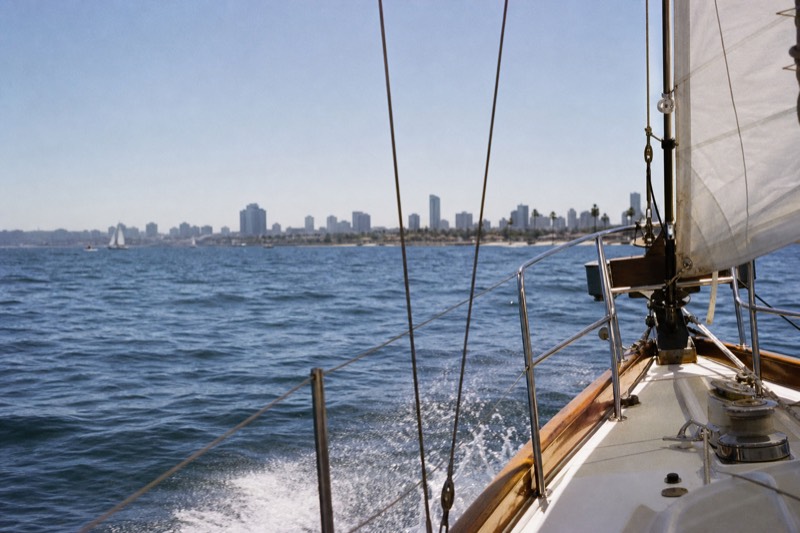
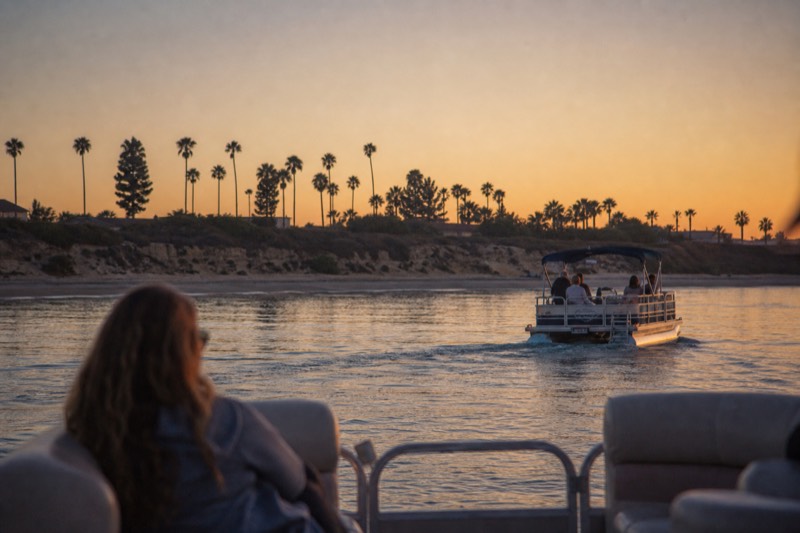
These are two different bodies of water, separated by the Point Loma peninsula, and one listing sold as a San Diego sunset cruise departs from Mission Bay rather than the harbour. Mission Bay gives you flat water and the sun dropping behind a low sand spit. San Diego Bay gives you the skyline, the Coronado Bridge and the Navy fleet, with the sun going down behind the Point Loma ridge.
Neither is wrong. They photograph completely differently, and the pick depends on whether you came for the city or for the horizon.
San Diego Bay
Mission Bay
Where you board
Harbor Island (955 Harbor Island Dr) or the Embarcadero (990 N Harbor Dr)
Quivira Basin (1617 Quivira Rd)
What the sun sets behind
The Point Loma ridge, so the disc disappears above the true horizon
The Mission Beach dune line and the open Pacific beyond it
What else is in frame
Downtown skyline, USS Midway, Coronado Bridge, working Navy piers
Low shoreline, palms, pleasure boats, no city
Water conditions
Sheltered, some chop in an afternoon sea breeze
Consistently flat, low wake
Typical trip length
2 to 2.5 hours under sail
1 hour 15 minutes
Who it suits
First-time visitors who want San Diego in the picture
Families, anyone prone to seasickness, short attention spans
One consequence worth planning around: because the sun sets behind high ground from inside San Diego Bay, the last direct light leaves the water earlier than the printed sunset time suggests, especially in winter when the sun tracks far to the south. The sky show carries on regardless. Colour after the disc goes is the better part anyway.
Any of these is easy enough to compare side by side across all 14 bay cruises if you have not settled on a category yet. And if you are booking around a specific dock, where the boats leave from covers the parking situation at each one, which is a bigger factor at 5pm on a weekday than most people expect. The Port of San Diego publishes the current Embarcadero parking options if you want the official version.
How do you photograph a San Diego sunset from a moving boat?
Shoot the twenty minutes after the sun disappears, not the twenty before. Point the camera east at the skyline while the west is still bright, because that is when downtown catches the warm light and the buildings start switching their own lights on. Brace against the shrouds or a rail, keep both elbows in, and stop worrying about the sun itself.
A boat is a moving platform in low light, which is the hardest combination there is. The three things that fix most of it are physical rather than technical: stand near the mast or a stanchion where the motion is least, shoot in bursts so at least one frame lands between swells, and get to the rail early because the good side fills up the moment the colour starts.
Time relative to sunset
What is happening
What to shoot
Where to be
60 minutes before
Hard light, high contrast, colour still cold
Wide shots of the boat, sails, crew at work
Anywhere; move around the deck now
30 minutes before
Light warms, shadows lengthen
Portraits with the skyline behind, backlit rigging
Windward rail, sun behind your subject
10 minutes before
Golden, fast-changing, the disc flattens
The sun through the rigging, silhouettes
Claim your spot; do not move again
At sunset
Disc drops behind Point Loma or the dune line
Horizon-line frames, the water going metallic
Bow or stern, whichever is clear
10 minutes after
Peak colour, pink and orange band, city lights on
East toward downtown, reflections on the water
Turn around; almost nobody does
25 minutes after
Civil twilight ending, blue hour, deep colour
Long exposures braced on a rail, lit bridge
Anywhere stable; keep the ISO up
That last row is the one to circle. Roughly half an hour after sunset, when the deck has thinned out because people assume the show is over, the bay is at its best: the Coronado Bridge lit, the skyline glass reflecting, and enough colour left in the west to keep the sky from going black. Dress for it, because that is also when the temperature drops. There is a full breakdown in what to wear on the water, and the short version is that the jacket you thought you would not need is the one you will wear home.
What happens if the evening turns overcast?
The trip still runs. Operators cancel for wind and heavy weather, not for cloud, so a grey evening sails as scheduled. You lose the orange disc and gain a soft, even light that flatters the city and the water. Every sunset listing on this site carries free cancellation up to 24 hours ahead, so a genuinely hopeless forecast is a reason to move the booking, not to skip the idea.
I have seen a lot of people talk themselves out of a June sailing because the morning was grey, then watch the layer lift at four in the afternoon. I have also seen evenings where it never lifted and the boat went out anyway into a flat pearl-coloured light that people ended up preferring. What you cannot do is decide on the morning of. The layer is a coastal phenomenon that changes hour by hour, and the forecast for downtown says very little about conditions two miles out.
The genuinely weather-dependent choice here is the marine layer season itself. If a guaranteed hard sunset matters more than anything else, book between October and April, when the sky over the bay is at its clearest and the colour is at its sharpest. You will pay for it in temperature. Winter sunsets on this water are cold in a way that surprises people who packed for Southern California, and the whale season month by month runs at exactly the same time, which is a decent argument for making one trip do two jobs.
The clear half of the year is also the half with something happening overhead. Late 2026 stacks three of those inside five weeks: a supermoon on November 24, the Geminids peaking all night on December 13 and 14, which is the richest and most dependable meteor shower of the year, and the Ursids on December 21 and 22, the same night as the solstice. A sunset sail is tied up long before a meteor shower gets going, so treat those dates as reasons to be afloat in real darkness rather than at five in the afternoon. The after-dark glow boat, from $70, and the late gondola slots are the two evenings on the sunset and evening sails page that are still out when the sky goes properly black, and both cap at six people, so a specific December date is worth claiming early.
What David books when the light matters most
This is judgment rather than data, so take it as such. For a first visit where the sunset is the whole point, I send people to a Harbor Island sail in late September or early October. The marine layer has broken by then, the water is still near seventy degrees so the evening chill is gentle, sunset lands around 7pm which leaves the evening intact for dinner, and the light after the disc goes is as good as this coast gets.
For February, the same sail with a warmer coat, because the colour in winter beats anything summer produces and the 5:30pm departure gets you ashore absurdly early. For a couple who want quiet over scenery, the Coronado Cays gondola sits in a different category altogether and does not compete on views. And for anyone travelling with someone who does not love boats, Mission Bay's 75-minute loop is the gentle option that still delivers a horizon sunset.
If you have landed on the classic sail, book it through the sunset and evening sails category page, because the departure time is the one detail that changes every couple of weeks.
Sunset cruise timing questions
What is the best month for a sunset cruise in San Diego?
September and October are the strongest combination: the marine layer has broken, the water is still warm enough that the evening chill is mild, and sunset falls between 6:15pm and 7:13pm, which leaves the rest of the evening usable. December and January give the sharpest colour of the year but the coldest decks and a sunset before 5:10pm.
How far in advance should I book a sunset sail?
The small-group sails cap at six guests, so summer weekends and any evening in the two weeks either side of a holiday go early. Booking a week ahead is comfortable most of the year. All of these listings allow free cancellation up to 24 hours before departure, so an early booking costs you nothing in flexibility.
Will I still see a sunset if it is grey when I board?
Often, yes. The marine layer is shallow and patchy, and it frequently thins offshore even when the Embarcadero stays under cloud. What you lose on an overcast evening is the hard orange disc; what you keep is the afterglow, the city lights coming up and the water going silver. Trips run as scheduled unless wind or heavy weather forces a cancellation.
Is the Mission Bay sunset cruise on San Diego Bay?
No. It departs from Quivira Road on Mission Bay, on the far side of the Point Loma peninsula from the harbour, and stays there. You get flat water and the sun dropping behind the Mission Beach sand spit, with no skyline, no Coronado Bridge and no Navy fleet in the frame. It is a good trip, just a different one from a harbour sail.
How long after sunset do the boats stay out?
On a 2.5-hour sail, typically twenty to forty minutes past the sun going down, which covers the whole civil twilight window. Shorter trips of an hour or less are usually back at the dock within fifteen minutes of sunset, so check the listed departure time against the sunset for your date if the afterglow is what you came for.
Which golden-hour boat is yours?
The general pick is the classic sunset sail: six guests, two and a half hours out of Harbor Island timed to the light, 4.9 from 356 reviews, from about $125.
Classic Sunset Sail
★ 4.9 · 356 verified reviews
Have a travel date in mind? Check the live departure time and price for the boat you want; the sailing time is the one detail that changes every couple of weeks.
2 hours 30 minutes · Departs 955 Harbor Island Dr, San Diego, CA 92101, USA · Free cancellation up to 24 hours
2 hours 30 minutes · Departs 955 Harbor Island Dr, San Diego, CA 92101, USA
The small-group sail that books out first: day and sunset departures from Harbor Island on a well-kept yacht, with a skipper who reads the bay for a living.
1 hour 15 minutes · Departs 1617 Quivira Rd, San Diego, CA 92109, USA
A 75-minute golden-hour loop of Mission Bay (not San Diego Bay proper) out of Quivira Road: calm water, low wake, and the sun dropping behind the Pacific dune line.